
3D-Printed Smart Labels That Tell You When Your Meat Goes Bad
FROZEN FOODSUSTAINABILITY
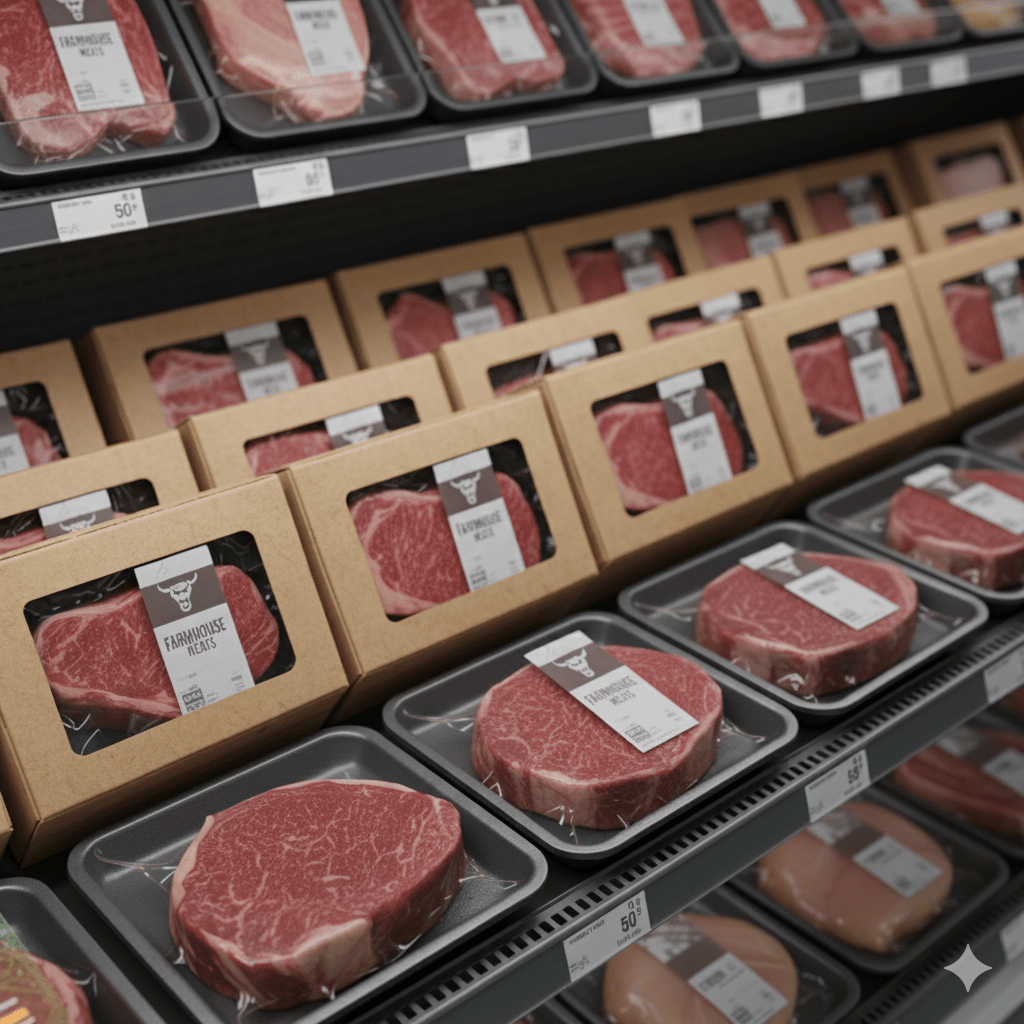
This is an AI generated illustration and does not represent actual product or service.
In a world increasingly concerned with food safety and waste, a novel invention promises to make determining the freshness of packaged meat as simple as looking at a color-coded label. An international patent (WO2025209595A1) filed by Jingasu University reveals an innovative method for creating smart freshness indicator labels using a technique called "infinite color-mixing 3D printing." This technology moves beyond traditional "best before" dates to provide a real-time, visual assessment of meat quality, potentially reducing food waste and preventing foodborne illness.
The Problem with "Best Before" Dates
Traditional methods for checking meat freshness, like microbial testing or chemical analysis, are accurate but impractical for everyday use. They are time-consuming, require lab equipment, and cannot be performed by a consumer at home. The ubiquitous "best before" or "use by" date, while helpful, is an estimate. It doesn't account for variations in the cold chain—if a package is left out too long during transport, the meat inside could spoil well before the printed date.
As meat spoils, bacteria break down its proteins, releasing volatile gases like ammonia and sulfur compounds. These gases alter the pH (acidity/alkalinity) inside the packaging. The core innovation of this patent lies in harnessing this pH change to create a visual warning system.
The Science of the Smart Label: Nature's Pigments Meet 3D Printing
The invention cleverly combines natural pigments with advanced manufacturing. At its heart are anthocyanins—the vibrant, pH-sensitive compounds found in purple, red, and blue plants like blueberries, red cabbage, blackcurrants, and purple sweet potatoes. Anthocyanins are what make red cabbage turn blue in baking soda (a base) and pink in vinegar (an acid).
The patent describes a multi-step process:
Extracting the Pigments: Anthocyanins are carefully extracted from natural sources like purple sweet potato, red cabbage, hibiscus, and black wolfberry. The raw materials are dried, ground, and soaked in ethanol to draw out the pigments, which are then purified and freeze-dried into a concentrated powder.
Creating the "Ink": This anthocyanin powder is mixed with a base material of wheat starch and water to create a gel-like, printable bio-ink.
The Revolutionary 3D Printing Process: This is where the "infinite color-mixing" comes in. The patent details a custom 3D printer nozzle equipped with two platinum electrodes. As the anthocyanin-based printing material passes through this nozzle, a programmable DC power supply applies a voltage across these electrodes.
This setup electrolyzes the water in the printing material, generating hydrogen ions (H⁺) at one electrode and hydroxide ions (OH⁻) at the other. This locally and precisely changes the pH of the bio-ink right as it is being extruded. By varying the voltage (from -60V to +60V), the printer can create a spectrum of pH environments, causing the anthocyanins to instantly change color. A negative voltage might produce reds and pinks, while a positive voltage creates greens and yellows.
A More Accurate and Reliable System
The key advantage of this method over existing single-pigment labels is its use of multiple anthocyanin sources. The patent demonstrates that different plants' anthocyanins change color at different rates and across different pH ranges.
By 3D printing a single label that contains, for example, both purple sweet potato anthocyanin and red cabbage anthocyanin, the label creates a complex, multi-colored array. As the meat spoils and the pH inside the package shifts, this array changes in a more pronounced and unmistakable pattern than a single color ever could. This multi-hued approach significantly reduces the error and ambiguity that can occur when relying on a single pigment, making the label highly sensitive and easy for anyone to interpret.
Proven Effectiveness in Real-World Tests
The patent includes data from tests on chicken. A label was placed inside a container with fresh chicken and stored at 25°C. Over 24 hours, the label's colors shifted dramatically—from its original yellows and reds to pinks, purples, and finally a light blue. These color changes closely matched the rising pH and Total Volatile Basic Nitrogen (TVB-N) levels of the meat, accurately signaling the transition from "fresh" to "semi-fresh" to "spoiled" long before the smell became obvious to the human nose.
A Clear Future for Food Packaging
This patented technology represents a significant leap forward in intelligent packaging. It offers:
Enhanced Food Safety: Consumers and retailers can see, at a glance, the actual state of the meat.
Reduced Food Waste: Accurate spoilage detection can prevent perfectly good food from being thrown away based on an arbitrary date.
Natural and Non-Toxic: The labels are made from safe, food-grade, plant-based materials.
Customizable and Versatile: The 3D printing process allows for the creation of labels tailored to specific types of meat or packaging environments.
By merging natural chemistry with precision engineering, this invention paves the way for a future where our food packaging communicates with us clearly, ensuring what we eat is not only delicious but also safe.


Trending Stories
Latest Stories
Inspiring the food industry by showcasing hidden and valuable innovations from patents.
Subscribe to our monthly newsletter and never miss a story
We promise, we won't spam you!
We care about your data in our privacy policy.


FoodTechForesight.com
Founder and Editor