A New Enzyme Cocktail For Truly Gluten-Free Plant Milks
DAIRY & ALTERNATIVES ALTERNATIVE PROTEINS
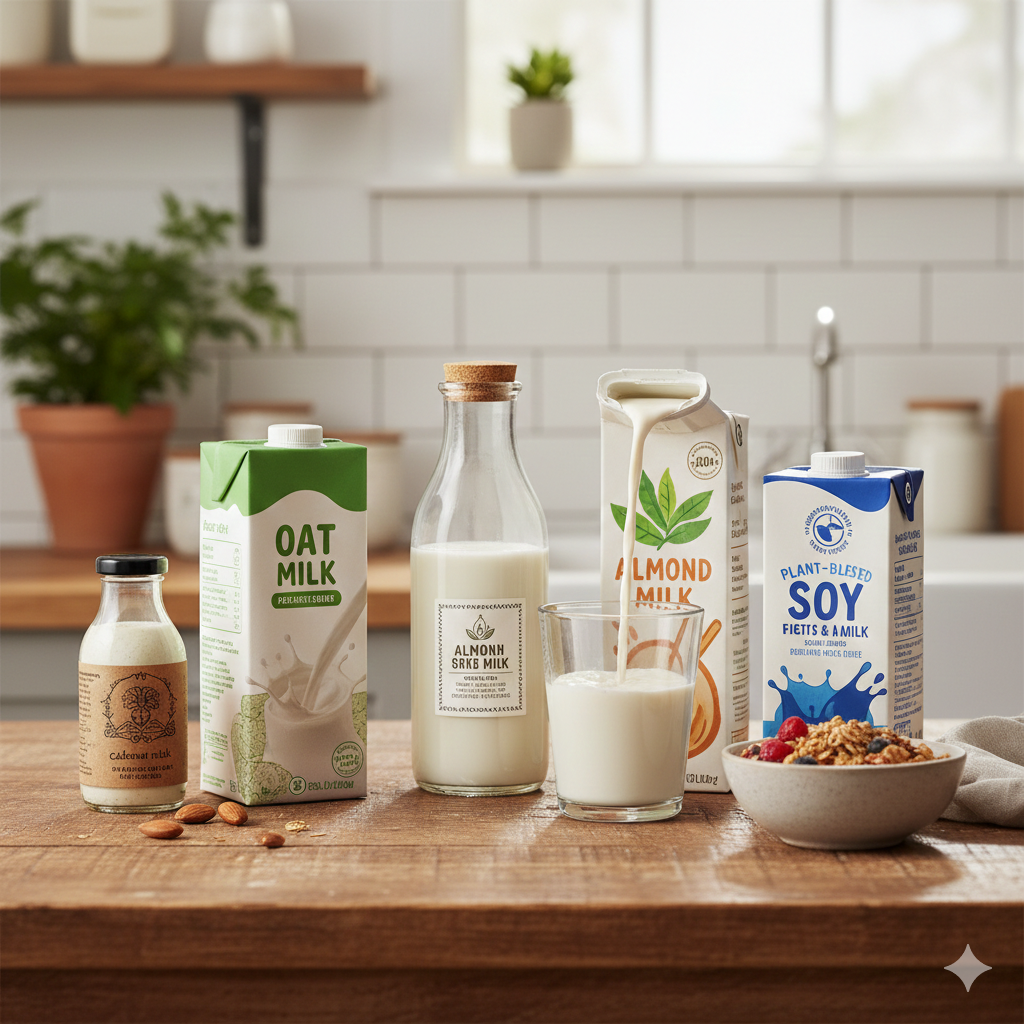
This is an AI generated illustration and does not represent actual product or service.
The booming plant-based milk market faces a persistent and invisible challenge: cross-contamination with gluten. Even oats, rice, and soy—naturally gluten-free grains—can become contaminated with wheat, rye, or barley during farming or processing. For millions with celiac disease or gluten sensitivity, this poses a serious risk, casting doubt on the safety of many "gluten-free" labeled drinks.
A new European patent application (EP 4678007 A1) from Spanish biotech company Cygyc Biocon introduces a precise enzymatic solution. The invention, a “Gluten-Free Plant-Based Beverage” process, uses a novel, multi-enzyme cocktail to reliably degrade gluten contaminants, promising a new standard of safety for the industry.
The Problem: Invisible Contamination
While plant milks are made from non-gluten grains, shared supply chains and equipment can lead to trace contamination. Regulatory bodies like the FDA and EU set a threshold of less than 20 parts per million (ppm) to label a product "gluten-free," but achieving this consistently with conventional processing is difficult. This patent addresses the need for a reliable, post-production "clean-up" step.
The Solution: A Synergistic Enzyme Team
The core innovation is a specific blend of enzymes, each chosen to attack gluten proteins at different points in their structure. The inventors found that only this precise combination works synergistically to break down gluten into harmless fragments.
The Essential Enzyme Cocktail includes:
Bromelain (from pineapple): A broad-spectrum protease that makes the initial cuts in the long gluten protein chains.
Protein-glutamine glutaminase & gamma-glutamyltransferase: These enzymes modify specific amino acids (glutamine) in gluten, making the proteins more susceptible to further breakdown.
At least one "Finisher" Enzyme (Leucyl aminopeptidase, Aspergillopepsin I, or Oryzin): These enzymes complete the job by chopping the larger protein fragments into tiny peptides that are non-immunogenic.
The patent emphasizes that omitting or substituting any one of these enzymes drastically reduces efficacy, as shown in comparative experiments.
Proof of Efficacy: From 120 ppm to Under 10
The patent includes compelling experimental data:
Commercial Oat Milk Test: Seven different commercial oat drinks with gluten levels ranging from 20-79 ppm were treated. After a 2-hour incubation with the enzyme mix at 60°C, all samples tested below the 10 ppm detection limit, achieving a certified gluten-free status.
Comparative Validation: A controlled test spiked an oat drink to 120 ppm of gluten. The patented enzyme cocktail reduced it to 18 ppm. In contrast, 11 alternative enzyme combinations (missing one core component or using substitutes) failed dramatically, leaving gluten levels between 44 and 107 ppm.
Why This Matters: Safety, Scale, and Simplicity
This enzymatic process offers several key advantages:
Uncompromising Safety: It provides a reliable, scalable method to guarantee gluten-free status, building crucial trust with celiac consumers.
Broad Application: The method is effective across a wide range of plant milks, including oat, rice, soy, almond, and more, making it a versatile tool for manufacturers.
Process Integration: The treatment is a straightforward step that can be integrated into existing production lines, involving incubation followed by standard heat inactivation of the enzymes.
Clean-Label Friendly: The enzymes themselves are inactivated and filtered out, leaving no residual ingredients on the label.
The Bigger Picture: Precision Food Safety
Cygyc Biocon's patent represents a shift from relying solely on pristine supply chains to employing biotechnology as a safety net. It acknowledges the reality of complex food systems and provides a targeted, scientific solution to a critical quality control problem.
For brands, this technology could become a key differentiator—a verifiable pledge of safety. For consumers, it represents the potential for truly worry-free choice in the plant-based aisle.


Trending Stories
Latest Stories
Inspiring the food industry by showcasing hidden and valuable innovations from patents.
Subscribe to our monthly newsletter and never miss a story
We promise, we won't spam you!
We care about your data in our privacy policy.


FoodTechForesight.com
Founder and Editor