
After Sugar, Israeli Startup Incredo Sets Its Sights on Fat
CONFECTIONARY
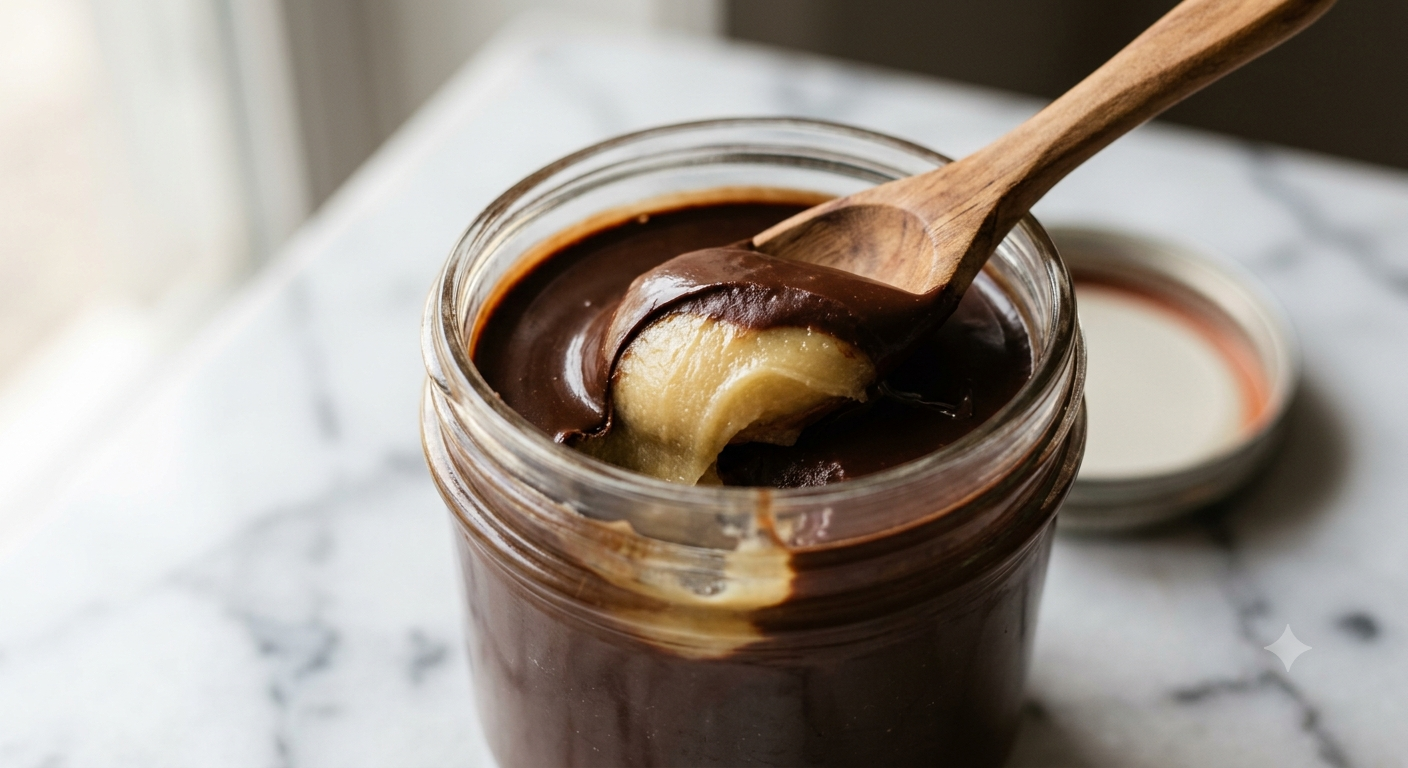
This is an AI generated illustration and does not represent actual product or service.
Israeli Startup, Incredo built its name — and more than 20 patents — on sugar reduction. Its core technology restructures sugar crystals so the tongue perceives sweetness more efficiently, allowing food manufacturers to cut sugar content without sacrificing taste. That is a focused, defensible bet, and it has defined the company's public identity since its founding.
So when a PCT application (WO 2025/037238 A1) filed under Incredo's name in August 2024 describes an edible oil-in-water emulsion gel made from potato protein — with explicit use cases in hazelnut spreads, butter cookies, plant-based meat, bacon analogs, and cheese analogs — it signals something more than an incremental R&D experiment. It looks like a deliberate expansion into fat reduction, a second pillar for a company that has spent years in the sweetness space.
The Problem Fat Replacement Has Always Had
Replacing fat in food is, in some ways, harder than replacing sugar. Sugar plays a clear sensory role — sweetness — and its reduction can be partially compensated through structural or perceptual tricks. Fat does several jobs at once: it contributes creaminess, mouthfeel, lubricity, structure, flavour release, and visual appeal. Remove it and you lose all of those simultaneously.
The approaches used so far — modified starches, methylcellulose, carrageenan, inulin, various protein gels — each solve part of the problem. Methylcellulose works well in plant-based meat at high temperatures but sets on heating rather than cooling, creating handling constraints. Starch-based systems add texture but lack the richness of fat. Protein gels can mimic fat's structural contribution but often require hydrocolloid co-emulsifiers, added salts, or processing conditions that complicate clean-label positioning.
The industry has been hunting for a fat replacement that is clean-label, structurally robust, processable at scale, and genuinely oil-rich — meaning it can deliver the mouthfeel and caloric density profile of real fat without the saturated fat load. That combination has proven elusive.
What Incredo Is Actually Claiming
The invention is an oil-in-water emulsion gel in which the structural matrix is formed by potato protease inhibitor proteins — a specific subfraction of the potato protein family, distinct from the more commonly discussed patatin.
The core claim is a gel formulation comprising protease inhibitor potato protein, water, and oil, where the oil is dispersed within a continuous protein-water phase. The claimed protein concentration sits in the range of 1.8 to 12% by weight. Oil content runs from 60 to 90% by weight. The protein-to-water ratio is specified as 0.09 to 0.4, and protease inhibitor proteins must constitute at least 60% of the total protein content in the gel.
That last requirement matters. Most potato protein concentrates on the market contain a mixture of patatin and protease inhibitors. The patent consistently specifies concentrates that are predominantly — ideally substantially all — protease inhibitor protein. This is not an incidental detail. The patent's thesis is that protease inhibitor proteins have unique functional properties at acidic pH that patatin does not share to the same degree, particularly their ability to form stable, high-internal-phase emulsion gels without requiring conventional emulsifiers or hydrocolloid additives.
The key processing levers are pH and heat. The protein dispersion is acidified — typically to pH 4.5 or below, often to 2.5 to 3.5 in the working examples — before oil addition and heating to at least 55°C, more typically 85°C, while mixing. The acidity matters because it drives the protein well below its isoelectric point (typically above 6 for potato protease inhibitors). The delta pH — the difference between the isoelectric point and the actual gel pH — appears to be a critical parameter for gel quality. The patent introduces the term explicitly and writes embodiments around minimum delta pH values of 1.0, 1.5, 2.0, 2.5, 3.0, and higher.
The HIPE Structure and Why It's Significant
At oil concentrations above approximately 74% by volume, the system enters what the patent describes as a high internal phase emulsion (HIPE) regime. At these loadings, oil droplets can no longer remain spherical and are deformed into polyhedral shapes, separated by thin protein-water films. The result is a dense, structured material that behaves more like a solid fat than a typical emulsion.
This is the mechanism behind the claim to solid fat replacement. If you can pack that much liquid vegetable oil into a stable gel matrix, you end up with something that handles, melts, and functions in baked goods or spreads in a way that crude liquid oil simply cannot.
The patent's working examples demonstrate storage modulus (G') values ranging from about 6,000 Pa to over 900,000 Pa depending on protein concentration, pH, oil content, and whether an additional water evaporation step is applied. Example 35, using a high-pH-deviation protein dispersion and canola oil, yields a G' of approximately 43,500 Pa. Example 52, after extended vacuum evaporation reducing water to about 5.2% and pushing oil content to nearly 88%, achieves a G' of approximately 917,000 Pa. For reference, palm-based shortenings typically sit in the range of tens of thousands to a few hundred thousand Pa depending on temperature — so the upper end of this range is genuinely solid-fat-like in mechanical terms.
The evaporation step is worth flagging as a potential commercial complication. Concentrating a finished emulsion under vacuum is technically feasible but adds a unit operation, increases energy costs, and introduces scale-up variables — particularly around maintaining emulsion stability during the dewatering process. The patent describes this step in terms of a "firmness differential" (Δf = G'₂ − G'₁), but the examples demonstrating the highest storage moduli all depend on this additional evaporative concentration.
The Protein Source: An Underused Fraction
Incredo's choice of protease inhibitor proteins over patatin is the less obvious and more interesting technical decision here.
Patatin is the dominant potato protein fraction — typically 40 to 55% of total soluble potato protein — and has attracted considerable academic and commercial attention as an emulsifier and gelling agent. It gels well at near-neutral pH and is relatively well understood.
Potato protease inhibitors, by contrast, are smaller proteins (5 to 30 kDa, compared to patatin at around 40 kDa), typically representing 30 to 45% of the soluble protein in potato juice. They inhibit serine, trypsin, chymotrypsin, carboxypeptidase, and aspartate proteases. Their functional properties in food systems — particularly their behaviour at low pH under high oil loading — are less extensively characterised in the open literature.
The commercial source specified repeatedly throughout the examples is Solanic® 300 from Avebe, a Dutch potato ingredient company. Avebe produces both patatin-enriched (Solanic 200 series) and protease inhibitor-enriched (Solanic 300 series) concentrates. The fact that a commercially available, food-grade protein concentrate already exists that matches the invention's specifications is meaningful. It means the raw material supply chain does not require novel upstream processing — an important practical consideration for any company hoping to scale.
A 2019 paper by Schmidt et al. in Food Hydrocolloids — cited in the search report as category A (general state of the art, relevant to all claims) — examined gelling behaviour of isolated patatin and protease inhibitor fractions from potato protein. That paper provides independent scientific context for the gel properties claimed here, and its existence confirms that the technical ground covered by the patent is not entirely uncharted.
The Sensory and Application Layer
The application examples are instructive about where Incredo sees commercial opportunity. Three categories stand out.
The hazelnut spread example (Example 53) uses the emulsion gel at 20% in a formulation otherwise matching conventional chocolate-hazelnut spread compositions. Two controls — one with palm oil, one with canola oil — are run in parallel. The sensory evaluation framework described (paired comparison and difference magnitude estimation) is methodologically sound, though no actual sensory results are disclosed in the patent. The examples establish the protocol rather than report outcomes. The absence of published sensory data makes it impossible to assess how the gel-containing spread actually performed against the palm oil control.
The plant-based burger analog (Example 55) and bacon analog (Example 55A) are structurally interesting target applications. Both categories currently rely heavily on coconut oil or palm fat to deliver the mouthfeel and fat-mimicking functionality that consumers expect. Palm oil in particular faces mounting regulatory and sustainability pressure in Europe, making clean-label replacements commercially attractive. A potato protein-based gel with 75 to 88% liquid vegetable oil content and no added emulsifiers or hydrocolloids would represent a genuinely differentiated ingredient in this space, provided the sensory performance holds.
The cheese analog (Example 55B) formulation uses the emulsion gel at approximately 22.7% alongside potato starch, corn starch, and water. Again, no rheological or sensory results for the finished cheese analog are reported — this is a preparation procedure, not a characterized outcome. Readers should treat these as application concept demonstrations rather than validated performance data.
Strategic Context: Why Fat, Why Now
For Incredo, this patent represents an obvious portfolio adjacency. Sugar reduction and fat reduction are the two largest reformulation priorities in functional food and health-oriented product development. A company that can credibly address both — with clean-label, plant-based technologies — occupies a more defensible and commercially valuable position than one addressing either alone.
Potato protein as a platform also fits neatly with existing food tech trends. Potato protein concentrates are produced as byproducts of the starch industry, making them relatively cost-effective and scalable compared to purpose-grown protein crops. The ingredient's non-GMO status and clean label potential are consistent with Incredo's stated positioning.
The critical unknown is whether Incredo intends to license this technology to food manufacturers — consistent with its current sugar-reduction business model — or develop it into a proprietary ingredient offering. The patent's formulation claims, covering the gel formulation itself, and its food product claims, covering hazelnut spreads, meat analogs, and cheese analogs containing the gel, suggest the company is keeping both options open.
Bottom Line
Incredo's potato protein emulsion gel patent is a technically credible and commercially logical move into fat replacement. The chemistry is sound, the raw material supply chain exists, and the application space — spreads, plant-based meat, baked goods — maps directly onto high-value reformulation problems the food industry is actively trying to solve.
The lack of published sensory data for the final food applications is a gap. What the patent demonstrates convincingly is that the gel can be made and that rheological parameters can be tuned across a wide range. What it does not yet show is whether these formulations actually taste and feel like the fat products they are intended to replace. That question — which ultimately determines commercial viability — will need to be answered outside the patent.


Trending Stories
Related Stories
Inspiring the food industry by showcasing hidden and valuable innovations from patents.
Subscribe to our monthly newsletter and never miss a story
We promise, we won't spam you!
We care about your data in our privacy policy.


FoodTechForesight.com
Founder and Editor