
An Australian Startup Thinks Electric Fields Can Replace the Freezer
FROZEN FOOD
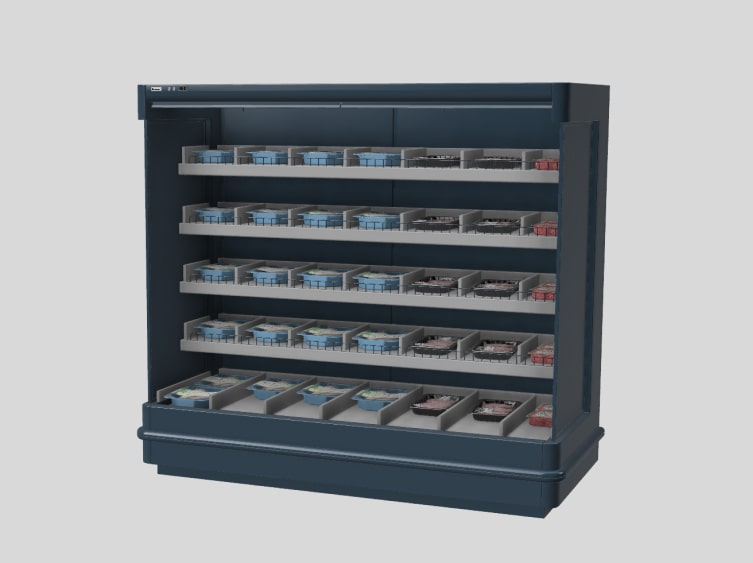
This is an AI generated illustration and does not represent actual product or service.
Every cold room operator knows the arithmetic of spoilage. A strawberry has maybe a week in a standard cool room. Asparagus turns woody in days. Wagyu beef, prized for its delicate marbling, degrades visibly if held too long even at near-freezing temperatures. The food industry has lived with this arithmetic for a century, accepting it as a physical fact rather than an engineering problem.
Green Tech Super Cooling Systems Pty Ltd, a Melbourne-based company working in collaboration with Zöld Science in India, is betting that assumption is wrong. Their PCT patent application WO 2026/117814, filed in September 2025 and published in June 2026, describes a device they call the Super Cooling System — a panel-based technology that generates and disperses an electric field within a refrigerated space to prevent water molecules in perishable foods from bonding into ice crystals. The aim is straightforward: keep food below freezing without actually freezing it, preserving texture, moisture, and cellular integrity in a way that conventional refrigeration cannot.
This is not science fiction. The physics underlying their approach — electrostatic field effects on ice nucleation — has genuine academic support. Whether Green Tech's specific implementation delivers on its more ambitious claims is a separate question, and one that deserves scrutiny.
Why Conventional Cold Storage Has Never Really Solved the Problem
Refrigeration slows spoilage. Freezing stops it — at a cost. When water inside plant and animal cells crystallises, the expanding ice punctures cell membranes, ruptures texture, and causes moisture loss upon thawing. Anyone who has frozen strawberries knows the result: mushy, structurally degraded fruit that bears little resemblance to fresh. For high-value produce, meat, seafood, or cut flowers, this damage is commercially significant.
The industry's workaround has been controlled atmosphere (CA) storage, which adjusts oxygen and carbon dioxide levels alongside temperature to slow ripening and microbial growth. CA systems can extend apple and pear shelf life to months. Commercial technologies using ethylene management and 1-methylcyclopropene (1-MCP) add further precision. But these require purpose-built infrastructure, are expensive to retrofit, and are largely restricted to produce that can tolerate long CA cycles. They don't solve the fundamental ice crystal problem for shorter-shelf-life items.
Supercooling — chilling a material below its freezing point without allowing crystallisation — has long been recognised as theoretically attractive. The challenge is stability. In practice, supercooled liquids are metastable; any nucleation event, a vibration, a dust particle, an imperfection in the container, triggers rapid crystallisation. Achieving controllable, sustained supercooling in an industrial cold room full of mixed produce, at varying positions relative to any field-generating device, is considerably harder than achieving it in a laboratory flask.
That is the problem Green Tech is attempting to solve.
The Xerosphere: What the Patent Actually Claims
The device described in WO 2026/117814 is straightforward in hardware terms. It consists of a planar mesh — preferably 40-mesh food-grade stainless steel, cut to panels of roughly 1 to 2 square metres — sandwiched between an electrically insulating polycarbonate sheet on its external face and a protective thermo-foam substrate on its internal face. The assembled panel is connected via silver solder contacts to a power supply unit capable of generating between 3,000 and 15,000 volts, depending on the size of the space. The patent specifies a high-performance transformer with 3,000-turn primary and 4,000-turn secondary windings, producing a corrugated electromagnetic waveform in the extremely low frequency range of 0 to 300 Hz.
Green Tech refers to the operational state created by this system as the "xerosphere." In this state, the electric field dispersed from the planar mesh surface is claimed to prevent water molecules from achieving the stable bonding configurations required for ice nucleation. According to the specification, food stored within the xerosphere can be cooled below 0°C — down to approximately -7°C — without freezing, retaining what the applicant describes as 99% of its moisture content.
The proposed mechanism draws on a reasonably well-established body of research. Water molecules, being polar, align in response to electrostatic fields. Several published studies have investigated how this alignment affects the thermodynamics of ice formation. Liu and colleagues demonstrated that electrostatic field application during freezing promotes ordered molecular clustering that resists nucleation. Wu and colleagues found that low-voltage electrostatic fields reduced ice crystal size in frozen pork. Kang et al. (2020), cited directly in the patent, showed that oscillating magnetic fields with intensities around 10 mT could disturb water molecule dipole moments sufficiently to inhibit nucleation. The patent's specification cites these studies carefully, which gives the underlying scientific premise more credibility than the applicant's own language — which at times veers into invented terminology and loosely defined concepts — might otherwise suggest.
The waveform itself is described as "corrugated" rather than a simple sine or square wave, produced by amplitude modulation through a circuit including an oscillator, modulator, amplifier, and transducer. The patent argues that this corrugated waveform creates varying amplitude peaks and troughs that keep water molecules in a continuously disturbed, energetically unfavourable state for crystallisation. A low-pass filter removes unwanted high-frequency components from the signal, leaving only the sub-300 Hz band the applicant believes is optimal.
The practical deployment model involves mounting multiple panels — branded as SCS Panels — on the walls or ceiling of an existing cool room, refrigerator, or reefer container. The patent explicitly positions this as a retrofit solution: no new infrastructure, no gas recharging, no purpose-built facility. The power supply unit is housed in an explosion-proof box. Installation, according to Green Tech's commercial materials, is described as plug-and-play.
The Experimental Evidence: Compelling Photographs, Incomplete Controls
The patent includes a number of photographic examples — figures 6 through 17 show spring onions, asparagus, peaches, strawberries, pears, apples, kiwifruit, grapes, broccoli, wagyu beef, chrysanthemums, and a strawberry comparison trial, all stored in cool rooms equipped with the SCS device. The storage durations cited are striking: pears at -2°C for 180 days, apples at 2°C for 300 days, kiwifruit at 1°C for 150 days, grapes at 2°C for 120 days.
The most directly probative data appears in two bacterial growth tables comparing chicken fillets, tenderloins, and wings stored in an SCS-equipped cool room against a standard cool room. The differences are substantial. By day 8, the standard plate count (total bacteria) in chicken fillets was roughly 300 times higher in the conventional cool room than in the SCS room. By day 14, the gap widened further. Coliform counts followed a similar pattern. The strawberry comparison (Figures 17A and 17B) shows visually striking differences after 3.5 weeks at 4°C — the SCS-stored berries appear firm and intact; the control berries are visibly degraded.
What This Means Commercially
If Green Tech's technology performs as described under independent validation, the commercial implications are significant — particularly for specific segments.
The retrofit proposition is the most strategically differentiated aspect of the approach. Unlike CAS-based systems, which typically require dedicated infrastructure and are found primarily in premium Japanese food processing facilities, the SCS panel concept is designed to mount into any existing cool room. That addresses the adoption barrier that has kept most supercooling preservation technology confined to high-value niche applications. A panel system that can be installed in a butcher's cool room, a cold chain logistics centre, or a hospital blood bank without reconstruction would open a substantially larger addressable market.
The claimed bacterial growth suppression, if validated, would also be commercially significant beyond shelf-life extension. A 23-fold reduction in total plate count at day 14 in chicken, even if the actual multiplier in independent testing turns out to be more modest, represents a meaningful food safety gain. For protein processors operating under tight HACCP requirements, that has a different value proposition than simply keeping produce looking fresh for longer.
The pharmaceutical and biomedical angle mentioned in the patent — blood products, vaccines — is worth watching separately. If the technology can extend the stable storage window of blood components without freezing, the implications for blood banks in low-resource settings could be meaningful. The patent notes that further testing will be conducted to confirm efficacy for hospital applications. That testing, and its results, will be more informative than the current filing.
What Industry Should Watch For
Green Tech is at an early stage. WO 2026/117814 is a patent application, not a granted patent, and the claims face a significant examination challenge given the prior art landscape. The performance data in the specification is internally generated and lacks the methodological transparency required for independent assessment. The company's commercial language is ambitious.
None of that means the technology is without merit. The underlying physics is sound, the retrofit deployment model is genuinely differentiated, and the visual evidence in the patent — whatever its evidentiary limitations — suggests that something is extending shelf life in the tested environments. The bacterial count data, if replicable, is the single most commercially compelling result in the filing.
For food businesses considering the technology, the practical question is straightforward: request independent validation data, preferably from a recognised food science laboratory, before committing to large-scale installation. For investors or strategic partners, the IP landscape warrants legal due diligence before any assumption of exclusivity.
The deeper question the patent raises is whether the industry is finally ready to move beyond the ice crystal era entirely. Supercooling preservation has been a research curiosity and a luxury Japanese technology for two decades. Whether an Australian startup with a retrofit panel system can bring it into mainstream cold chain logistics will depend less on the claims in this filing and more on what the validation data, when it arrives, actually shows.


Trending Stories
Related Stories
Inspiring the food industry by showcasing hidden and valuable innovations from patents.
Subscribe to our monthly newsletter and never miss a story
We promise, we won't spam you!
We care about your data in our privacy policy.


FoodTechForesight.com
Founder and Editor