
Finnish Startup Smart Salt's Quiet Bet on an Ancient Crystal
CONFECTIONARYFROZEN FOODBAKERY
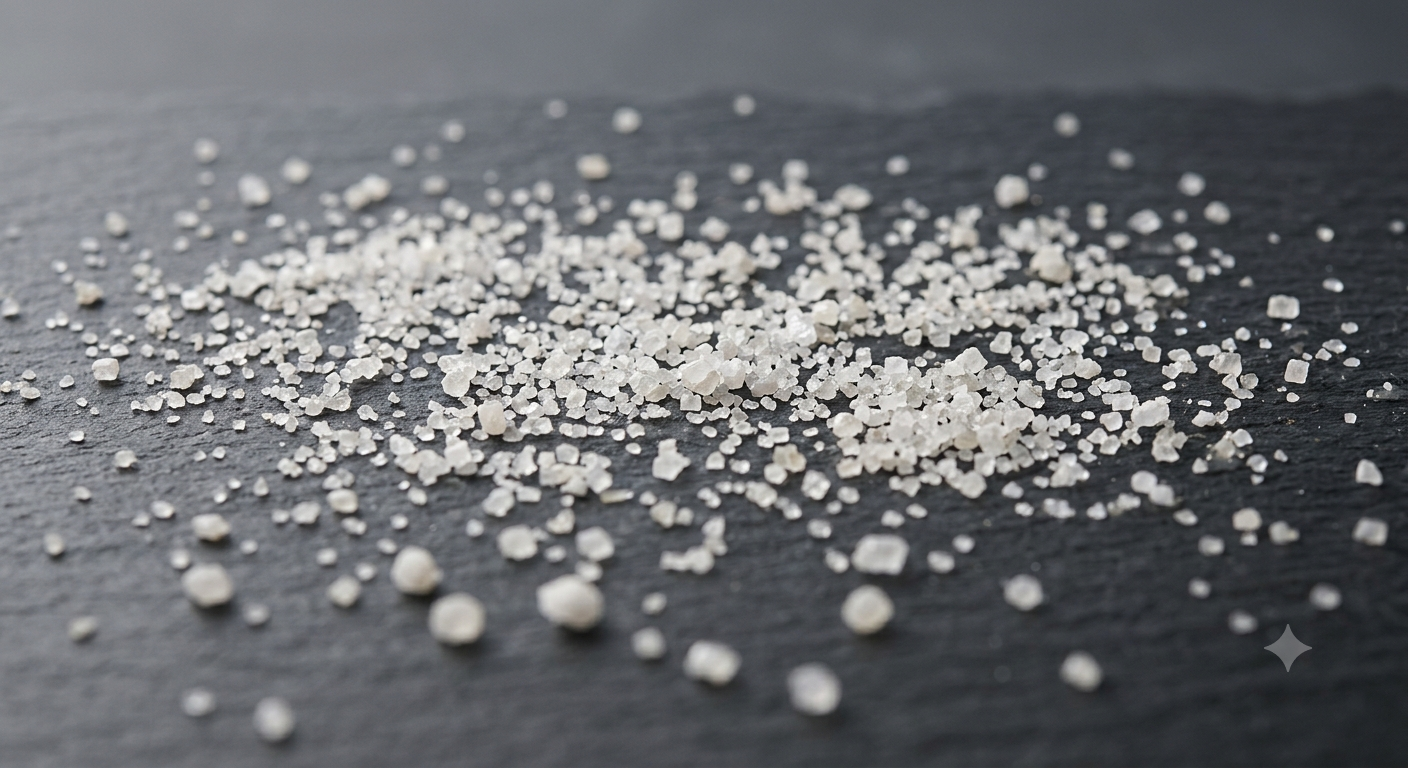
This is an AI generated illustration and does not represent actual product or service.
Salt reduction is one of the most stubborn problems in food manufacturing. The science has been understood for decades. The regulatory pressure is relentless. And yet, for most reformulators, the options remain frustratingly narrow: dilute with potassium chloride, mask the metallic aftertaste, and accept some functional trade-off somewhere along the line.
A patent application published in June 2026 by Finnish company Smart Salt Oy suggests a different approach — one built around a mineral that most food scientists have never worked with, and that nature produces in only the most extreme conditions on earth.
The mineral is carnallite. And the question worth asking is whether Smart Salt has found a genuinely better ingredient, or simply a more complicated path to the same destination.
What Is Carnallite, and Why Does It Matter?
Carnallite is a naturally occurring double salt: magnesium chloride and potassium chloride crystallised together, with six molecules of water locked into the structure, giving it the formula MgCl₂·KCl·6H₂O. It forms only in highly concentrated brining conditions — which is why natural deposits are found deep underground in ancient evaporite strata, and around the shores of the Dead Sea, where it appears as transparent lumps.
It has been used at the margins of the food salt industry for years, primarily in animal feed and in niche reduced-sodium blends. The problem has always been the same: natural carnallite is hygroscopic (it aggressively absorbs atmospheric moisture), contaminated with bromides, arsenic, and lead, and extraordinarily difficult to produce as small, uniform crystals suitable for food use. In laboratory conditions, carnallite crystallises into glassy transparent lumps — beautiful, but commercially useless.
Smart Salt's patent application (US 2026/0165352 A1, filed December 2024) claims to solve the crystallisation problem. If it holds up, the downstream implications extend well beyond a cleaner ingredient specification.
The Core Technical Problem Smart Salt Is Solving
The conventional approach to making food-grade carnallite involves separating it from natural sources, recrystallising to remove impurities, drying, and blending with other chloride salts. This works, but the process is expensive, impurity removal requires chemical treatment steps, and the resulting product still tends to form medium-to-large crystals rather than the fine, uniform particles needed to blend smoothly with sodium chloride and potassium chloride.
The prior art is instructive here. WO 2014/087056 A1 — cited by Smart Salt's inventors and clearly the intellectual predecessor to this application — described a one-step method of producing carnallite-containing blends by adding dry potassium and sodium chlorides to a cooled carnallite suspension. That process was notable for producing no waste and recycling all mother liquor. But it had a critical limitation: the added dry salts absorbed free water during carnallite formation, releasing more water as the double-salt crystallised, leading to caking and the need for additional homogenisation. The carnallite formed was not consistently small-grained, and the water content of the moist mixture complicated drying.
Smart Salt's inventors identified the root cause: carnallite crystallises poorly at moderate temperatures because the strongly hydrated magnesium ions resist forming the tight ionic pairs needed for double-salt nucleation. Standard evaporation protocols push temperatures above 100°C to force the process, at which point hydrogen chloride can be released, degrading taste and forming unwanted basic magnesium hydroxy chloride (MgOHCl).
The Nucleation Enhancer Approach
The central innovation in this patent is the use of what the inventors call nucleation enhancers — small amounts of water-insoluble, OH-functional powder materials added to the crystallisation system that catalyse the formation of small carnallite crystals at lower temperatures.
The mechanism proposed is a form of surface catalysis, more commonly seen in organic chemistry. The OH-functional surface of the particles appears to disturb the hydration shell around magnesium ions, bringing them into closer contact with potassium ions and lowering the energy barrier for carnallite nucleation. Crucially, the patent states that even catalytic amounts of these materials — small enough to have no detectable presence in the final product — are sufficient to trigger this effect.
The materials identified as promising nucleation enhancers include magnesium hydroxy carbonate in several hydrate forms, amorphous magnesium silicate, mixed magnesium hydrosilicates, and precipitated silica. These are classified by surface acidity: weakly acid materials tend to produce medium-sized crystals with clustered morphology, while weakly basic materials produce smaller crystals requiring more careful drying.
With nucleation enhancers present, the patent describes crystallisation proceeding at 40–70°C rather than the 100°C+ conditions required previously. The crystallisation heat released when the double salt forms is actually captured usefully: it drives off the freed water, and the moist crystalline carnallite mass can be evaporated to near-dryness while maintaining temperatures below 50°C — low enough to prevent any structural degradation of the product.
The resulting carnallite has a crystal size in the range of 0.3–0.8 mm, described as comparable to standard alkaline chloride particles, and a purity specification of 99.5–99.9% carnallite by dry weight. At this crystal size and purity level, the material can be directly blended with dry NaCl and KCl in a rotating drum dryer, with the blending itself serving to coat the moisture-sensitive carnallite crystals with the alkaline chlorides — which absorb residual moisture and improve the blend's humidity stability.
What the Examples Actually Show
The patent includes five working examples. All are conducted at laboratory scale (beaker-level, 400 ml vessels).
Example 1 serves as a baseline: no nucleation enhancer, 55°C evaporation. The result is a "moist glassy transparent residue" that must be crushed into coarse crystals — precisely the problematic form factor the invention aims to avoid.
Examples 2 and 3 introduce magnesium carbonate and magnesium hydroxy carbonate respectively as nucleation enhancers at approximately 50 mg scale. In both cases, small-sized carnallite crystals form within minutes, the suspension turns white, and free water is easily evaporated during the mild thermal treatment. The final blends with NaCl and KCl are described as freely flowing.
Example 4 uses precipitated silica (40 mg) as the nucleation enhancer at 50–55°C. The carnallite begins to crystallise into small agglomerates, which are mostly dispersed during processing. The middle-sized crystal form (described as "middle-sized") performs well in the final blend.
Example 5 introduces magnesium hydrogen carbonate as the nucleation enhancer and incorporates a reduced-pressure drying step over a water bath at approximately 40°C using a rotary evaporator. The blend with 44 g KCl and 100 g NaCl is dried under these mild conditions, yielding the final product.
The Phosphate Angle Is the Most Commercially Interesting Claim
Much of the patent's background and description focuses on the expected application: reduced-sodium salt blends for consumer and food service use. That market is real and growing, but it is also crowded with existing products including potassium chloride blends, mineral salt systems, and flavour-modulator technologies.
What stands out is the explicitly stated intent to position carnallite blends as a substitute for phosphates in processed meat products — specifically sodium triphosphate (STP, E451) and sodium tripolyphosphate (STPP), used extensively in sausages, ham, and reformed meat products as water-binding agents, emulsifiers, and preservatives.
The rationale is structural. STP and STPP each contain six crystal water molecules in their dry form, making them chemically comparable in terms of hydration capacity to carnallite. The patent argues that carnallite blends, by virtue of this analogous water-binding capacity combined with mild acidity (in contrast to the slightly alkaline character of phosphate systems), could function as drop-in phosphate replacements.
This is not a trivial claim. Phosphate functionality in processed meat is deeply embedded in product design: phosphates bind structural water, improve yield during cooking, extend shelf life, and influence colour stability. Regulatory pressure on phosphates is increasing — the FDA has been active in restricting industrial use of STPP specifically because of environmental concerns around eutrophication of freshwater systems, and because elevated serum phosphate has been identified as a cardiovascular risk marker.
Smart Salt's internal snack sausage trial is cited as producing "mostly positive" results, but the evidence base at this stage is thin. Demonstrating true phosphate equivalence across the range of processed meat formats — cooked ham, dry sausage, emulsified frankfurters, chicken patties — would require extensive controlled trials, and the patent does not disclose this data. The bakery application angle (replacement of polyphosphates as anti-caking agents and moisture retainers in bread) is mentioned but similarly undeveloped in the examples.
If the claim holds up in practice, it opens a substantially larger market than reduced-sodium salt alone: the global phosphate food additive market runs to hundreds of millions of dollars annually, and clean-label pressure on phosphate labelling is acute.
The Hygroscopicity Problem — Solved or Managed?
The historic barrier to carnallite's use in food products has been moisture sensitivity. Natural carnallite and even recrystallised food-grade carnallite absorbs atmospheric moisture readily, causing blends to cake, clump, and deteriorate in storage.
The patent's answer to this is mechanical rather than chemical: by blending the moist carnallite crystals directly with dry alkaline chlorides (NaCl and KCl) in a rotating drum dryer, the alkaline chloride particles coat the carnallite crystals, encapsulating the moisture-sensitive surface and absorbing residual water. The drying step is conducted at or below 40°C to prevent caking.
This is a pragmatic solution, and the coating logic is sound: if the carnallite surface is effectively shielded by NaCl and KCl, the blend's equilibrium moisture uptake should be governed primarily by the less hygroscopic major components. The patent states that the blend has "improved stability against atmospheric humidity compared to corresponding products produced by conventional methods," which is plausible given the lower process temperatures preserving crystal integrity.
What is not disclosed is accelerated shelf-life data, humidity cycling performance, or comparative caking indices. These would be the critical data points for any food manufacturer evaluating the ingredient for production use, particularly in applications with extended supply chain exposure.
Smart Salt's Strategic Position
Smart Salt is not a new entrant to the reduced-sodium space. The company's core commercial offering, the Smart Salt® system, has been deployed across processed meat, bread, cheese, soups, and snack applications, with application testing across a broad range of formats. Clinical data from the company indicates meaningful blood pressure reduction after eight weeks of use compared to regular salt. The product is marketed with a "reduced sodium salt" labelling claim, which is straightforward to implement for food manufacturers.
The carnallite production patent fits into this context as a manufacturing foundation rather than a consumer proposition. If Smart Salt can consistently produce food-grade carnallite at fine crystal size, low process temperature, and without the impurity burdens that have historically constrained natural carnallite, the resulting ingredient platform becomes significantly more manufacturable and cost-competitive.
The Finnish background is relevant: Smart Salt operates in a regulatory and food culture context where mineral salt innovations have a history of serious scientific development. The inventors — Juhani Mäki and Tero Huopaniemi — are working from a body of prior art that includes their own earlier process patent and the broader Scandinavian tradition of clinically validated functional ingredients.
Bottom Line
Smart Salt's carnallite patent represents a technically credible solution to a real manufacturing problem: the inability to produce food-grade carnallite consistently in fine crystal form without high-temperature processing that degrades the material. The nucleation enhancer approach is novel and the surface catalysis mechanism is scientifically plausible, though the evidence base at this stage is limited to small-scale laboratory experiments.
The more interesting commercial bet embedded in this application is the phosphate substitution claim. If carnallite blends can genuinely replace STPP in processed meat — delivering comparable water binding and shelf-life extension under a clean, mineral-based label — the addressable market extends well beyond the established reduced-sodium salt category. That would be a meaningful strategic expansion for a company that has spent years proving its technology works in bread, cheese, and sausage one product at a time.
Whether the crystallisation method survives patent prosecution in its current scope, and whether the phosphate-substitution functionality holds up in scaled commercial trials, are the two questions that will determine how significant this application turns out to be. For now, it is a well-reasoned early claim on a genuinely differentiated ingredient platform.
US Patent Application 2026/0165352 A1, "Method for Producing Carnallite and a Carnallite Product," was filed December 13, 2024, by Smart Salt Oy, Helsinki, Finland. It is a published application, not a granted patent.


Trending Stories
Related Stories
Inspiring the food industry by showcasing hidden and valuable innovations from patents.
Subscribe to our monthly newsletter and never miss a story
We promise, we won't spam you!
We care about your data in our privacy policy.


FoodTechForesight.com
Founder and Editor