
Formulating a Low-GI Electrolyte Drink for Medically Vulnerable Patients: Kenvue's Innovation
NUTRACEUTICALS
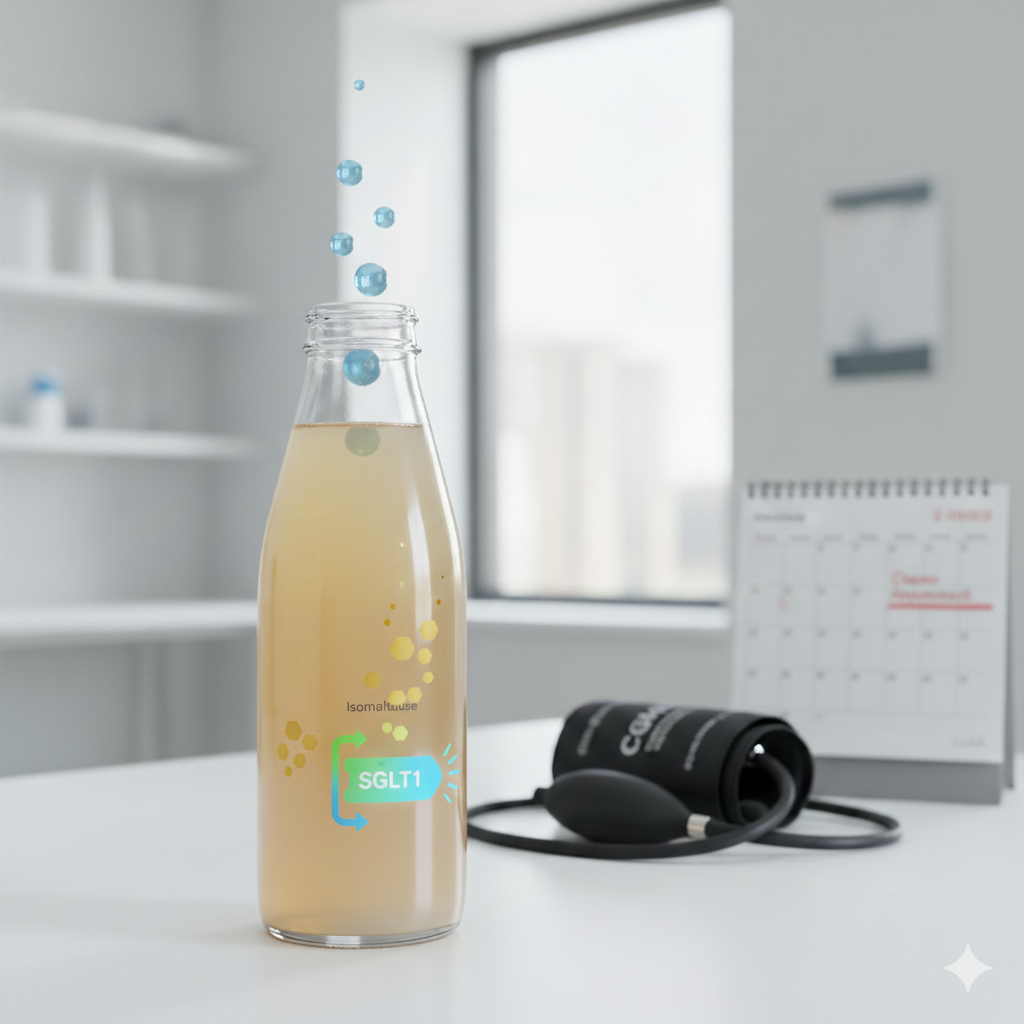
This is an AI generated illustration and does not represent actual product or service.
Rehydration is critical, but not all electrolyte drinks are created equal—especially for patients with diabetes, cancer, or hypertension. Many standard formulas are packed with high-glycemic sugars and sodium levels that can be problematic for these vulnerable groups, creating a paradox where a solution for dehydration may exacerbate an underlying condition.
A new international patent application (WO 2026/011108 A1) from Kenvue (a spin-off from Johnson & Johnson Consumer Health) tackles this challenge head-on. The invention, a “Ready to Drink Electrolyte Solution,” describes a meticulously formulated beverage designed to provide safe, effective hydration and energy for patients with complex medical needs, without spiking blood sugar or overloading on salt.
The Core Innovation: A Dual-Carbohydrate, Low-Sodium Matrix
The patent’s key advancement is a specific nutritional formula that balances three critical parameters: effective rehydration, controlled energy release, and safety for restricted diets.
The Precision Formula includes:
Isomaltulose (Primary Carb): A slow-digesting sugar with a low Glycemic Index (GI=32), providing sustained energy release
Minimal Glucose (Dextrose): Kept very low (<0.9g/100mL, often ~0.5g) to provide just enough “quick” energy and—crucially—to activate the sodium-glucose transport pump (SGLT1) in the gut for active hydration, without causing a blood sugar spike
Low Sodium: Sodium molarity is kept below 50 mmol/L (and often between 20-30 mmol/L), making it suitable for elderly patients or those with hypertension, while still being sufficient for the SGLT1 mechanism
Chromium Picolinate: Added in trace amounts (e.g., 10-120 µg/100mL), a form of chromium studied for its potential role in improving insulin sensitivity
Low Osmolarity: The overall solution is designed to be hypotonic or isotonic (<600 mOsm/L), facilitating rapid water absorption.
The result is a drink with a theoretical Glycemic Index of 50 or less (examples show ~34), classifying it as a low-GI food, and a low glycemic load per serving.
Targeting a Critical Unmet Need
This formulation is explicitly designed for populations poorly served by conventional sports drinks or oral rehydration salts (ORS):
Patients with Diabetes: The low and slow carbohydrate profile helps avoid dangerous glycemic fluctuations.
Cancer Patients: Addresses dehydration and weakness from chemotherapy/radiation without exacerbating metabolic stress.
The Elderly: Provides hydration and energy with a sodium level safe for common age-related hypertension.
Chronic Gastrointestinal Disorders (IBS/IBD): Offers gentle rehydration and energy without high osmotic load or irritating sugars.
Example Formulations: From Lab to Label
The patent provides concrete example formulas (see Trials 3-5 in the article table). A core formula includes:
Isomaltulose: ~12.02 g/100mL
Dextrose: ~0.48 g/100mL
Sodium: Provided by salts like sodium chloride and citrate, totaling ~20-30 mmol/L.
Chromium Picolinate: 0.00006 g/100mL (60 µg/100mL).
Later iterations add fruit juice concentrates (apple, lemon) for palatability without significantly affecting GI, and can be fortified with vitamins (D2, B12) and minerals (zinc, iron) to support the immune system—a critical consideration for immunocompromised patients.
Why This Innovation Matters in Health & Wellness
Kenvue’s patent highlights several important trends:
Medicalization of Everyday Nutrition: It blurs the line between a consumer beverage and a medical nutrition product, designed with specific pharmacokinetics (SGLT1 activation) in mind.
Precision Formulation for Comorbidities: It acknowledges that patients often have multiple, conflicting dietary restrictions (e.g., need carbs for energy but must limit sugar; need sodium for absorption but must limit salt).
Palatability as Compliance Driver: The inclusion of flavors, sweeteners (like stevia), and juice concentrates addresses a major failure point in medical nutrition: patients won't drink what tastes bad, no matter how beneficial.
Aging Population Focus: The formulation directly targets the physiological and pathological challenges of dehydration in the elderly.
The Bigger Picture: The Future of Condition-Specific Hydration
This patent points toward a future where hydration is not a one-size-fits-all solution. Instead, it will be tailored to underlying metabolic states—diabetic hydration, oncologic hydration, geriatric hydration—each with its own precise electrolyte and carbohydrate signature.
For Kenvue, a leader in consumer health, this represents a strategic move into a high-value, scientifically nuanced category that leverages their expertise in both OTC pharmaceuticals and trusted consumer brands. It’s a sophisticated play that meets a genuine clinical need with a product designed for real-world use.


Trending Stories
Latest Stories
Inspiring the food industry by showcasing hidden and valuable innovations from patents.
Subscribe to our monthly newsletter and never miss a story
We promise, we won't spam you!
We care about your data in our privacy policy.


FoodTechForesight.com
Founder and Editor