
How Cargill and Cubiq Foods Slashed Ice Cream Calories by 41% Using Pea Protein and Sunflower Oil
FROZEN FOODDAIRY & ALTERNATIVES CONFECTIONARYMOST POPULAR
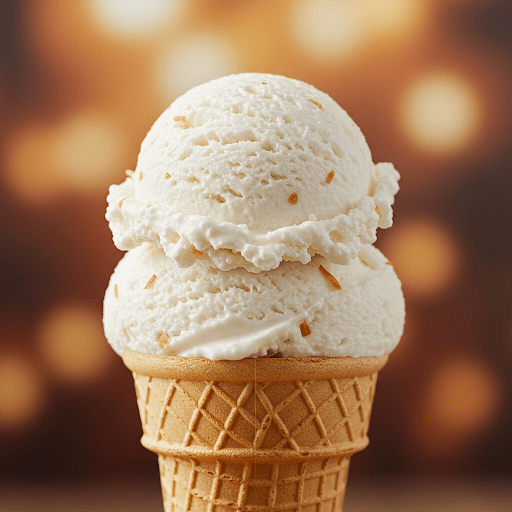
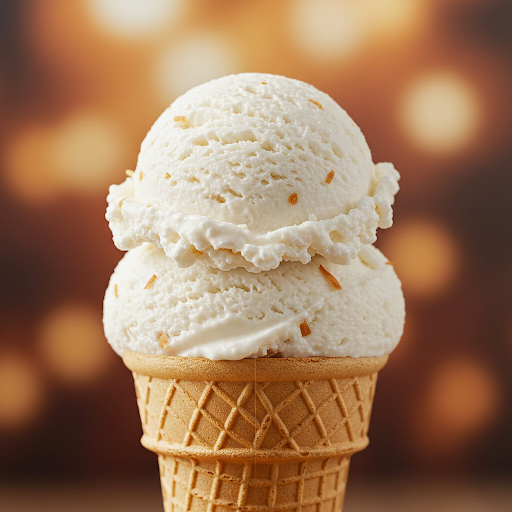
This is an AI generated illustration and does not represent actual product or service.
Fat is not just a nutrient in ice cream. It is architecture. The fat globules — typically from dairy cream — do the structural work that gives a scoop its creaminess, its resistance to ice crystal growth, its ability to hold air after churning, and the way it coats your palate when it melts. Strip that away, as low-fat and non-dairy product developers have learned repeatedly over the past two decades, and what you're left with is something that is icy, lean, and texturally hollow. Consumers notice immediately.
That persistent formulation challenge is what a patent filed jointly by Cargill and Spanish food-tech company Cubiq Foods is attempting to address. Published in June 2026 (WO 2026/117485 A1), the application describes a frozen confection product — explicitly non-dairy in its preferred form — built around a carefully specified combination of plant protein, vegetable oil, and hydrocolloids. The core claim is that this system can deliver improved sensory performance and overrun while significantly reducing total fat, calories, and saturated fat relative to conventional formulations. That is a claim worth examining closely, because it has been made many times before, and the industry graveyard of failed low-fat ice cream alternatives is well-populated.
The Problem with Replacing Dairy Fat
Conventional ice cream typically carries 5 to 16 percent fat by weight, almost all of it from cream, and that fat is doing multiple things simultaneously. It contributes to the emulsification of the mix, supports aeration during freezing (overrun), lubricates mouthfeel, and slows the recrystallization of ice. Saturated fatty acids in dairy fat also crystallize in ways that are beneficial for structural stability.
When formulators replace dairy cream with plant-based alternatives, they face a cascade of trade-offs. Plant proteins behave differently at oil-water interfaces. Vegetable oils have different fatty acid profiles and crystallization behaviour. Hydrocolloid stabilizers can compensate for some rheological losses, but high concentrations introduce their own textural problems — gumminess, stringiness, a synthetic mouthfeel. Getting all these variables to work together, under industrial processing conditions and across a retail distribution chain with temperature fluctuations, is a genuinely difficult engineering problem.
What Cargill and Cubiq Are Actually Claiming
The patent's approach is compositional rather than process-based. The inventive concept sits in the specific combination of ingredients and their defined concentration ranges, not in any novel manufacturing step.
The system has four primary components: plant protein (preferably pea protein, at 0.5 to 6 wt.%), a vegetable oil selected from a defined list including high oleic sunflower oil as the preferred candidate (1 to 5 wt.%), hydrocolloids in powdered form (0.17 to 1.0 wt.%, with a preferred sweet spot of 0.27 to 0.4 wt.%), and sweeteners (4 to 25 wt.%). The base liquid in the worked examples is almond milk (at 51 wt.%), making the product fully plant-based.
The hydrocolloid selection is particularly specific in the dependent claims. Rather than carrageenan or microcrystalline cellulose — which appear in many conventional ice cream stabilizer blends — the applicants focus on konjac fiber, konjac gum, agar-agar, locust bean gum, and guar gum, used in combinations. The high oleic sunflower oil preference is also deliberate: high oleic varieties contain at least 80% oleic acid in the claims, offering better oxidative stability than standard sunflower oil and a more favorable fatty acid profile for nutritional labelling.
The process claim follows a standard ice cream manufacturing sequence: hydration of plant protein, blending with dry and liquid ingredients, addition of oil, heating to at least 60°C, homogenization at 2000 psi, pasteurization at 85°C for 60 seconds, cooling and overnight aging at 4°C, then freezing and aeration in a batch freezer.
The Experimental Data: What It Shows and What It Doesn't
The patent includes a comparative example and three worked examples, which is more experimental substance than many published applications provide. The comparative example (Comparative Example 1) uses 12 wt.% coconut oil as its fat source, giving it a total fat content of 12.54 wt.% and a saturated fatty acid (SAFA) content of 92% of the oil/fat fraction. The three inventive examples replace this with 2.4 wt.% high oleic sunflower oil, dropping total fat to 2.94 wt.% and SAFA to 9%.
Caloric reduction is substantial: the comparative example delivers 220 kcal per 100g serving, while all three inventive examples come in at 130 kcal — a 41% reduction. This is primarily a function of the dramatic drop in fat content rather than any novel caloric manipulation.
The overrun data tells a more interesting story. The comparative example, with its high coconut oil content, achieved only 19% overrun. All three inventive examples outperformed it substantially: Example 1 reached 37%, Example 2 reached 34%, and Example 3 reached 30%. For context, the patent describes ice cream alternatives as targeting 20 to 100% overrun, with premium-style products at the lower end. The inventive examples sit in a reasonable mid-range, and the fact that lower-fat formulations achieved better air incorporation than the higher-fat control is genuinely counterintuitive and worth noting.
Sensory evaluation was conducted using an expert panel of 4 to 6 panelists across two repetitions. This is a small panel, and readers should weigh the findings accordingly — expert panel data from a handful of trained evaluators is informative but not equivalent to consumer research at scale. The results show a clear progression. Example 1 (minimal hydrocolloid blend) was described as highest icy with an astringent, dry mouthfeel and a distinct pea and almond taste. Example 2 improved on that — less icy and more creamy, less astringent, less sweet. Example 3 was rated least icy and most creamy with good mouthcoating, though it was also noted as less sweet. Example 2 was identified as the overall preferred sample.
Importantly, the applicants note that despite the significant reduction in fat content, the products were still perceived as creamy. That observation is the core sensory claim of the patent, and it is supported by the internal data — though the mechanism behind it is not explained in the specification. Whether this perception of creaminess would survive in a broader consumer sensory study, or in a product that has gone through extended cold chain distribution, is not addressed.
Cubiq Foods: The Strategic Dimension
The joint applicant arrangement here is strategically interesting. Cargill is one of the world's largest ingredient suppliers, with extensive capabilities in plant proteins, oils, and starches. Cubiq Foods is a Barcelona-area food-tech startup that has built its identity around structured fat systems — originally focused on 3D-printed fat for meat alternatives, but more broadly positioned around functional lipid technology. Bringing these two together on a frozen confection patent suggests Cubiq's expertise in lipid structuring and emulsification is contributing something meaningful to the formulation design, likely in how the high oleic sunflower oil behaves functionally within the hydrocolloid matrix.
A co-filing of this type also raises questions about commercialization intent. Cargill has the manufacturing relationships and ingredient supply infrastructure to bring a concept like this to market at scale quickly. The fact that the patent covers both the product composition and the preparation process gives the partnership broad tools to work with, whether they choose to license the system, supply a proprietary ingredient blend to ice cream manufacturers, or develop a product directly.
What This Means for the Industry
Cargill is not a company that files speculative patents. When it commits IP resources to a frozen confection formulation in collaboration with a functional lipid startup, it typically signals a product pipeline or at minimum a serious ingredient system in development. The combination of a substantially reduced SAFA profile, meaningful calorie reduction, and sensory data suggesting comparable creaminess — even if from a small panel — gives the formulation enough legs to be commercially interesting.
For R&D teams working in non-dairy frozen desserts, the key technical signal from this patent is the hydrocolloid composition and concentration sweet spot. The range of 0.27 to 0.4 wt.% identified as most preferred is notably lower than many conventional stabilizer systems, and the preference for konjac and agar-based gums over carrageenan is worth noting given ongoing regulatory and consumer sentiment around carrageenan in food.
The broader lesson, and the one that makes this patent relevant beyond Cargill and Cubiq specifically, is that the path to a commercially viable low-fat non-dairy ice cream probably lies less in trying to mimic dairy fat's behavior and more in redesigning the textural system from the ground up — accepting that you are building something different, and optimizing for the sensory attributes that matter most to the target consumer. Whether this particular formulation solves that problem at retail scale is something only a full consumer study and supply chain test can answer. The patent, at minimum, suggests there is a credible route worth pursuing.


Trending Stories
Related Stories
Inspiring the food industry by showcasing hidden and valuable innovations from patents.
Subscribe to our monthly newsletter and never miss a story
We promise, we won't spam you!
We care about your data in our privacy policy.


FoodTechForesight.com
Founder and Editor