
How Nestlé Engineered a Protein Drink That Looks Like Water — and Gels on Command
BEVERAGESMOST POPULAR
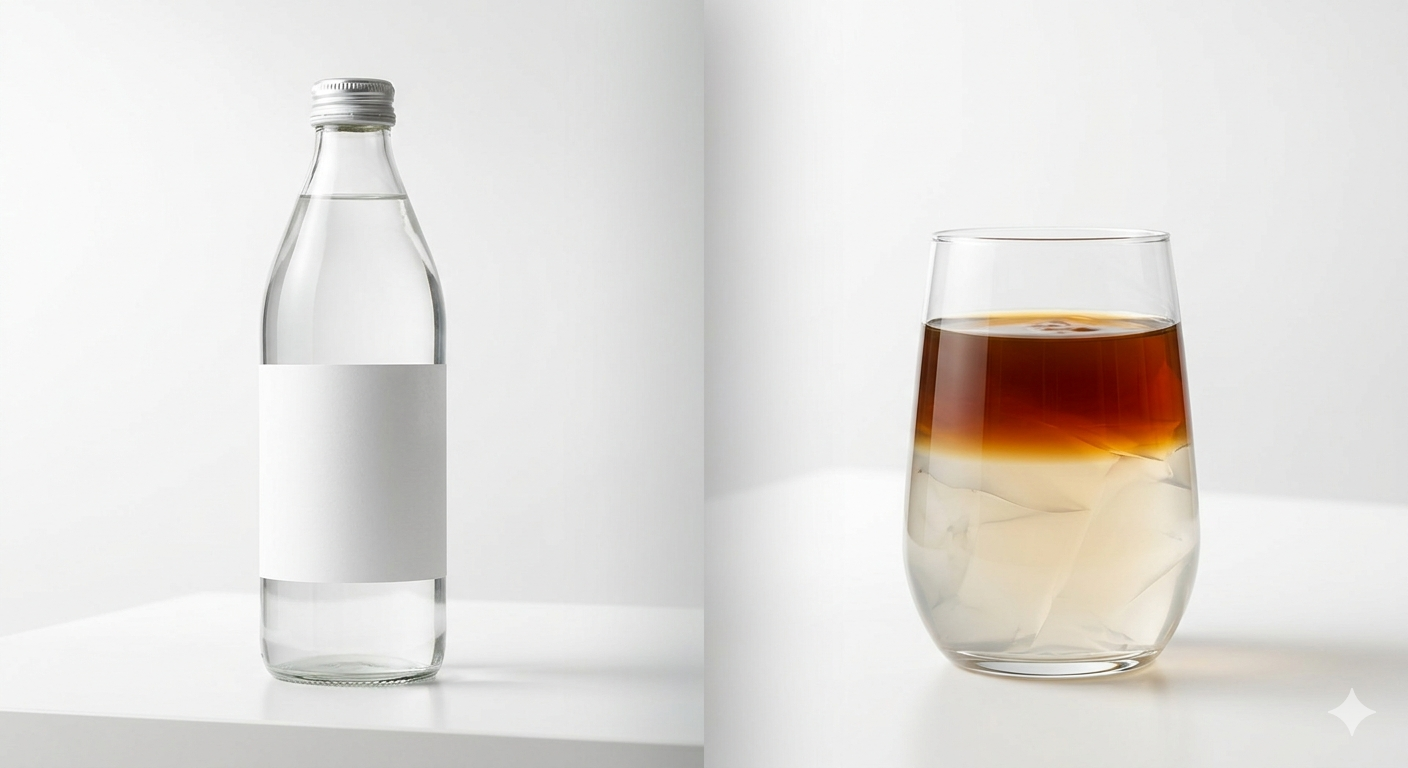
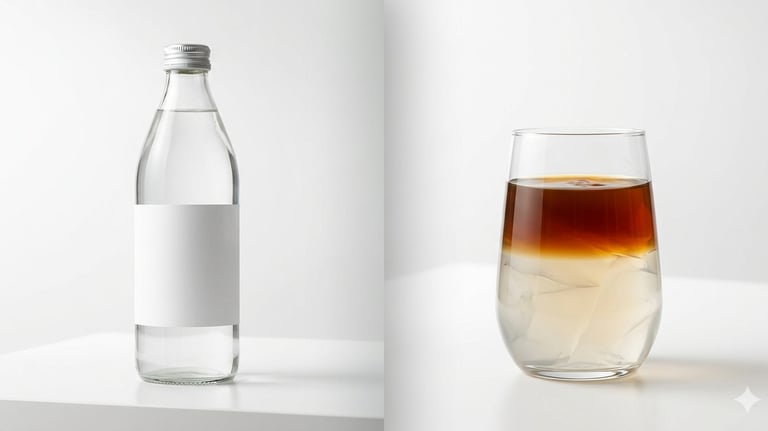
This is an AI generated illustration and does not represent actual product or service.
Whey protein has spent the last decade fighting an image problem. It's the supplement-shelf ingredient — cloudy, slightly gritty, and tasting faintly of sourness once formulated below pH 4.5 for stability. For a food giant trying to push protein into mainstream beverage categories rather than just the sports-nutrition aisle, that's a real constraint. Consumers buying bottled water, iced tea, or coffee don't expect their drink to look like a protein shake.
Nestlé has just published a PCT application (WO2026120170A1) that attacks this problem from an unusual angle. Instead of trying to make a protein drink that tastes better, it engineers one that's optically and texturally invisible — a completely clear, neutral-pH liquid containing more than 1% whey protein isolate — and then gives that liquid a second life as a self-forming gel the moment it meets something acidic. Pour it into coffee or fruit juice, and rather than curdling messily (the fate of most protein-fortified liquids mixed with acid), it sets into a soft, jelly-like layer at the bottom of the glass.
It's a small piece of chemistry with a surprisingly wide set of possible downstream applications, from layered ready-to-drink beverages to functional desserts built around a "add your own acid" mechanic. It also illustrates how much of food innovation now happens not at the ingredient level, but at the level of formulation logic — getting familiar inputs to behave in unfamiliar ways.
The Problem Nestlé Is Solving
The patent's background section lays out four categories of liquid beverages currently on the market, and all four have a flaw:
Whey-derived liquids without protein (lactose-based, like Rivela) — transparent, but nutritionally thin.
Low-pH whey protein isolate (WPI) drinks — protein-containing and shelf-stable, but acidic and sour-tasting, which limits where they can be used (you can't easily mix a pH-4 protein drink into coffee without curdling it).
Semi-transparent or opaque protein drinks — visually unappealing for categories where clarity signals freshness or premiumness.
Pre-gelled bottled beverages with jelly — fixed in form once produced, offering no flexibility.
The application frames this gap clearly: nobody had a protein beverage that was simultaneously transparent, neutral-pH, shelf-stable, and capable of being repurposed into a different format (a gel, a layered drink, a foam) by the consumer at point of use.
How the Formulation Works
The core composition, per Claim 1, is deceptively simple:
Water (the bulk, typically 85–90%)
More than 1.0% whey protein isolate — claims describe a range up to roughly 10%, though preferred embodiments cluster around 1.0–1.5%
0.20–1.00% hydrocolloid, generally carrageenan, often blended with a second gum (xanthan, locust bean gum, gellan gum, etc.) in ratios up to 50:100 relative to the carrageenan
0.03–0.40% buffering salt — potassium citrate and sodium/trisodium phosphate are the preferred choices
pH held at 6 to 8 (preferred range 7.2–8.0)
The mechanism described in the patent is worth understanding because it's the actual inventive insight, not the ingredient list. Under neutral pH, both the whey protein and the hydrocolloid carry a negative charge, so they repel each other — this is what keeps the liquid clear and stable rather than aggregating into visible particles. The buffering salt's job is to hold that neutral pH steady during storage and processing.
When an acidic substance is introduced — the patent specifically cites fruit juice or other acidic beverages with pH below 4.0 — the pH of the mixture drops below the whey protein's isoelectric point. At that point the protein flips to a net positive charge and starts binding electrostatically to the still-negative hydrocolloid network. Cations from the buffering salt (potassium, for instance) reinforce that network further, increasing the gel's firmness. The result, according to the patent, is a gel with peak compression force of 100–200 g — described as having "good hardness and elasticity" without requiring heat or added high-concentration salts to set.
This is a reasonably elegant piece of structuring: the same buffering salt that stabilizes the liquid form at neutral pH also participates in firming the gel once that equilibrium is disrupted by acid. It's a dual-function ingredient choice rather than two separate systems bolted together.
What the Experimental Data Actually Shows
The application includes nine working embodiments and two comparative examples, all built around a fixed base — 10% trehalose, ~1.15% WPI, 88%+ water — with the gum ratio, buffering salt type, and buffering salt concentration varied between them.
A few observations worth flagging for anyone evaluating the technology's robustness:
The absorbance numbers are genuinely impressive. Embodiment 1 measured an absorbance of 0.019 at 600 nm — well inside the claimed "0.05 or lower" range that the patent treats as visually equivalent to water. That's a meaningful technical achievement; getting >1% protein into solution at neutral pH without haze is not trivial, and it's the kind of measurable, instrument-verified data point (rather than a subjective "looked clear" claim) that gives this part of the disclosure some credibility.
The buffering salt concentration is doing more work than the headline numbers suggest. Comparative Example CE1 used the same formulation as E1 but with potassium citrate raised from 0.075% to 0.5% — and the "milk beverage" set into a lumpy gel during production, before any acid was added at all. That's a useful negative result: it shows the system has a fairly narrow processing window, and that buffering salt concentration isn't just about pH control but is itself close to a phase-transition trigger. For a contract manufacturer scaling this up, that narrow window between "stable liquid" and "premature gel" is the kind of detail that will matter far more in practice than it does on paper.
Comparative Example CE2 (no WPI) is the real control, and it's informative. Without protein, the same hydrocolloid-and-buffering-salt base mixed with the acidic Shuirong C100 lemon beverage produced no gel at all — just a thin, slightly viscous liquid (peak force of 12.83 g versus 100–200+ g for the protein-containing versions). This confirms the protein-hydrocolloid electrostatic interaction is indeed the load-bearing mechanism, not the hydrocolloid alone. It's a clean piece of evidence, and exactly the kind of comparative data that strengthens a patent's technical claims.
The gelling agent used for testing is a named commercial product, not a generic acid. All nine embodiments were gelled using "Shuirong C100," a concentrated lemon juice beverage from Nongfu Spring Co., Ltd., with a measured pH of 2.99. This is reasonable as a proof of concept, but it does narrow what's actually been demonstrated. Coffee, tea, and other commercially relevant acidic beverages have different buffering capacities, different concentrations of organic acids, and different mineral content — all of which could affect gelling speed, final firmness, and visual clarity of the resulting gel layer. The patent's broader claims (layered beverages with coffee or tea per Claim 14) are not directly supported by experimental data in this disclosure; they remain prophetic claims based on the same proposed mechanism, not measured outcomes.
Shelf stability testing is limited to 48 hours at 4°C. That's a standard short-term stability screen, but it tells you relatively little about real-world ambient shelf-stable distribution over weeks or months — which is presumably the commercially relevant scenario for a UHT-processed beverage. No accelerated shelf-life or extended real-time stability data is disclosed here.
Why This Matters Commercially
Setting the legal uncertainty aside, the underlying idea has some genuinely interesting commercial angles that go beyond "clear protein water."
The two-stage format is the real innovation, not the clarity. Plenty of companies have chased clear protein beverages. What's less common is a protein beverage explicitly designed to be a platform — sold as a stable liquid, then converted by the consumer (or by a foodservice operator) into a gel, a foam, or the base layer of a stratified drink. That opens up format flexibility that a single fixed-form product doesn't have: the same base SKU could become a protein-boosted bubble-tea-style drink, a layered iced coffee with a jelly base, or a spoonable protein dessert, depending entirely on what acidic liquid it's combined with at the point of consumption or service.
This is squarely aimed at the high-protein beverage trend, but sidesteps its usual aesthetic trade-off. The functional beverage category — protein waters, protein-fortified RTD coffee, etc. — has grown by leaning into either visible opacity (smoothie-style) or accepting a sour, low-pH taste profile. A neutral-pH, genuinely clear 1%+ protein base that doesn't taste acidic on its own is a different value proposition: it can sit in a product category (sparkling water, flavored water, RTD tea) that currently has near-zero protein penetration because protein fortification has historically wrecked clarity or taste in those formats.
Foodservice and DIY mix-in applications seem like the more realistic near-term use case than packaged retail. A consumer or barista pouring this base into coffee or a juice blend to create a layered, gelled drink is a much lower regulatory and stability bar to clear than a pre-packaged, long-shelf-life layered beverage sold on a retail shelf. The patent's own embodiment data (manual mixing at 1:1 to 1:3.5 ratios with an acidic beverage, gel forming after blending) reads more like a "café customization" use case than an industrial RTD production process.
The Bottom Line
This patent protects a formulation principle — pH-triggered, charge-driven gelation of a previously stabilized protein-hydrocolloid system — rather than a single finished product. That's worth remembering: a granted patent here would give Nestlé broad coverage over a mechanism, not evidence that a specific commercial beverage is imminent. Whether this becomes a retail product, a foodservice ingredient sold to cafés and bubble tea chains, or simply sits as defensive IP, will depend on factors well outside what's disclosed in this filing — taste testing, cost modeling, and how the X-citation issue resolves during prosecution.
For ingredient suppliers and competing dairy innovators, the more durable takeaway is the underlying chemistry itself: charge-based protein-hydrocolloid interactions, deliberately suppressed at neutral pH and deliberately triggered by acid, offer a reusable toolkit for building "transform on contact" beverage formats — well beyond just clear milk drinks. That's the idea worth tracking, regardless of how this specific patent application fares.


Trending Stories
Related Stories
Inspiring the food industry by showcasing hidden and valuable innovations from patents.
Subscribe to our monthly newsletter and never miss a story
We promise, we won't spam you!
We care about your data in our privacy policy.


FoodTechForesight.com
Founder and Editor