
Louisiana State University's Innovation to Turn Insect Protein to Soy Sauce
ALTERNATIVE PROTEINSSUSTAINABILITY
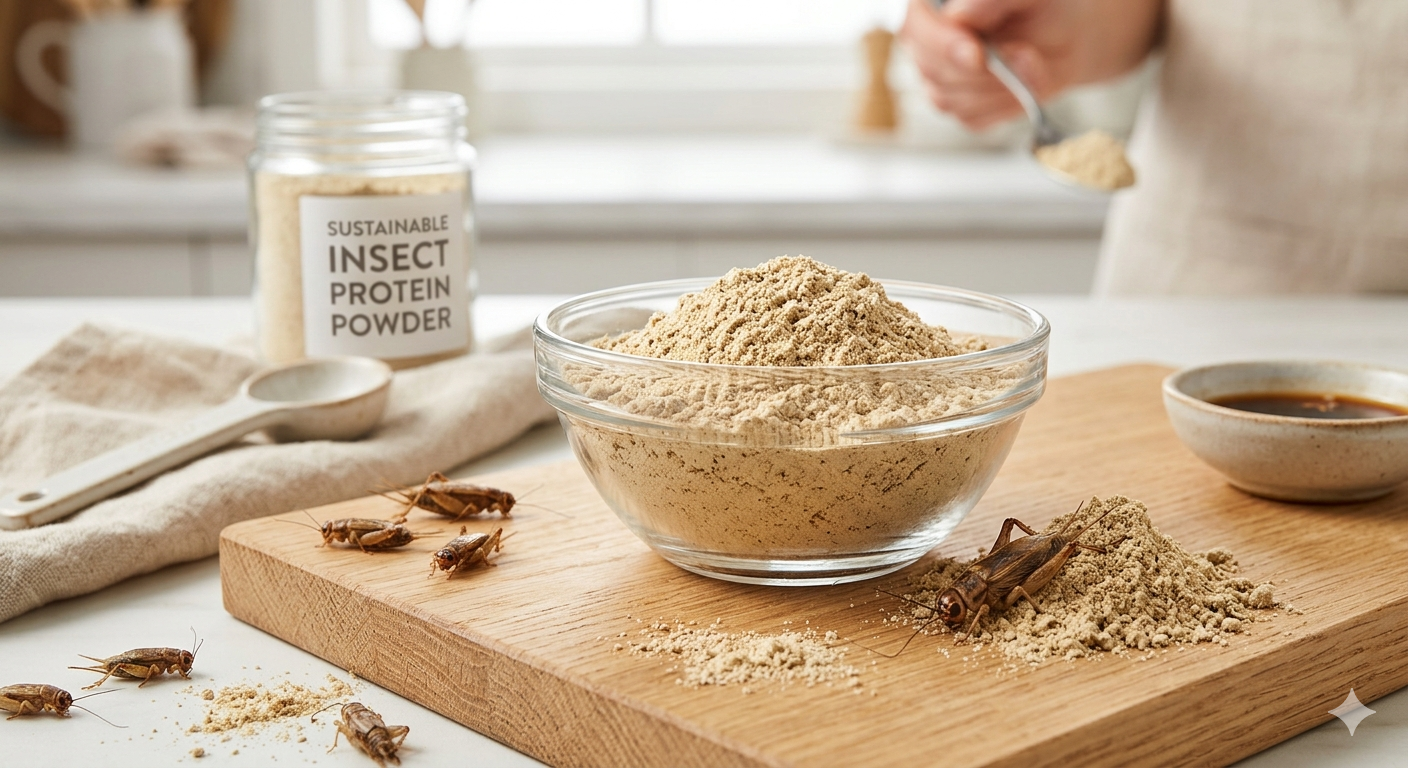
This is an AI generated illustration and does not represent actual product or service.
Imagine a soy sauce that doesn’t come from soybeans – and takes just 8 hours instead of 8 months.
That’s exactly what researchers at Louisiana State University have developed, as detailed in a newly published patent application (US20260096582A1). Their innovation? Using acid hydrolysis to transform ordinary cricket powder into a dark, complex, soy sauce‑like seasoning.
Why crickets?
Edible insects are a sustainability superstar: they need far less land, water, and feed than cattle, and they produce fewer greenhouse gases. Nutritionally, house crickets (Acheta domesticus) pack high‑quality protein, essential amino acids, healthy fats, and minerals like calcium and zinc.
But in Western countries, most people won’t voluntarily chomp on a dried cricket. The LSU team asked: What if we turn crickets into something familiar‑tasting, like soy sauce?
From months to hours
Traditional soy sauce fermentation takes 6–8 months and requires constant monitoring. The patent notes that prior fermentation‑based attempts to make a cricket‑derived seasoning sauce were “time‑consuming, complex, and costly,” requiring several months and additional ingredients like sugars, salts, and flavor enhancers (e.g., rice or wheat).
The new acid hydrolysis process is radically simpler:
Mix dried cricket powder with hydrochloric acid (1–6N).
Heat at 95–100 °C for about 8 hours under reflux.
Neutralize with sodium hydroxide to pH ~4.5.
Centrifuge and filter to remove solids.
That’s it. In one short day, the acid breaks down cricket proteins into free amino acids, while chitin (insect “fiber”) hydrolyzes into smaller sugars. Those sugars and amino acids then react via Maillard reactions, Strecker degradation, and lipid oxidation to create a rich volatile profile.
How does it compare to real soy sauce?
The patent makes several explicit comparisons:
Amino acid content: “The resulting liquid hydrolysate contains more total amino acids than traditional soy sauces.” Under optimal conditions (6N HCl, 1:3 cricket‑to‑acid ratio), total free amino acids reached 69 mg/mL.
Aromatic profile: The cricket seasoning sauce possesses “an aromatic profile resembling that of commercial soy sauces.” Consumer panelists (130 people) described it using terms like “soy sauce‑like,” “savory,” “seasoning‑like,” “smoky,” “salty,” “meat‑like,” “pungent,” “roasted,” and “umami.”
Key aroma compounds: The patent notes that phenols and methoxyphenols (such as 2‑methyl phenol and 2‑methoxy phenol / guaiacol) are “important contributors to the smoky flavor in soy sauce.” Both compounds were identified in the cricket hydrolysates. Also, “both compounds have been identified in acid‑hydrolyzed soy sauce.”
Total solids: Commercial soy sauce can have total solids between 20 wt% and 50 wt%. The cricket hydrolysates reached up to 21.44 g/100 g.
Importantly, the patent emphasizes that the acid hydrolysis procedure uses insect protein as the main substrate or even the sole substrate – unlike some other methods that require added rice or wheat.
What’s actually in the bottle?
Under optimal conditions (6N HCl, 1:3 cricket‑to‑acid ratio), the hydrolysate contains:
Total free amino acids: 69 mg/mL – higher than many commercial soy sauces.
Glutamic acid (the core of umami): 10.5 mg/mL.
Aspartic acid: 8.3 mg/mL.
The researchers identified 36 volatile compounds, including:
Pyrazines (roasted, nutty – also found in coffee).
Benzaldehyde (almond‑like) and phenylacetaldehyde (honey‑like).
Guaiacol (smoky – a signature note in soy sauce).
Furans (caramel, meaty).
Organic acids like succinic acid (adds light umami), lactic acid, and acetic acid round out the flavor.
A few optional tweaks
The inventors also describe ways to fine‑tune the product:
Defat the cricket powder first (with ethanol, hexane, etc.) to avoid rancid off‑notes from lipid oxidation.
Remove some chitin to concentrate taste‑active amino acids.
After hydrolysis, add reducing sugars (glucose, fructose, or xylose) and let a controlled Maillard reaction run for even deeper roasted notes.
And while house crickets were used here, the patent says other insects work too – mealworms, locusts, silkworms, black soldier flies, even honeybees.
The bottom line
This isn’t exactly traditional soy sauce – the patent describes it as a “soy sauce‑like condiment.” But it shares the same key aroma compounds, a similar sensory profile, and in some respects (like free amino acid content) even exceeds conventional products. It’s fast, reproducible, and made from a hyper‑sustainable protein source.


Trending Stories
Latest Stories
Inspiring the food industry by showcasing hidden and valuable innovations from patents.
Subscribe to our monthly newsletter and never miss a story
We promise, we won't spam you!
We care about your data in our privacy policy.


FoodTechForesight.com
Founder and Editor