
Nestlé’s New Plant-Based Milk Paste: A Game Changer in Alt Dairy
DAIRY & ALTERNATIVES SUSTAINABILITY
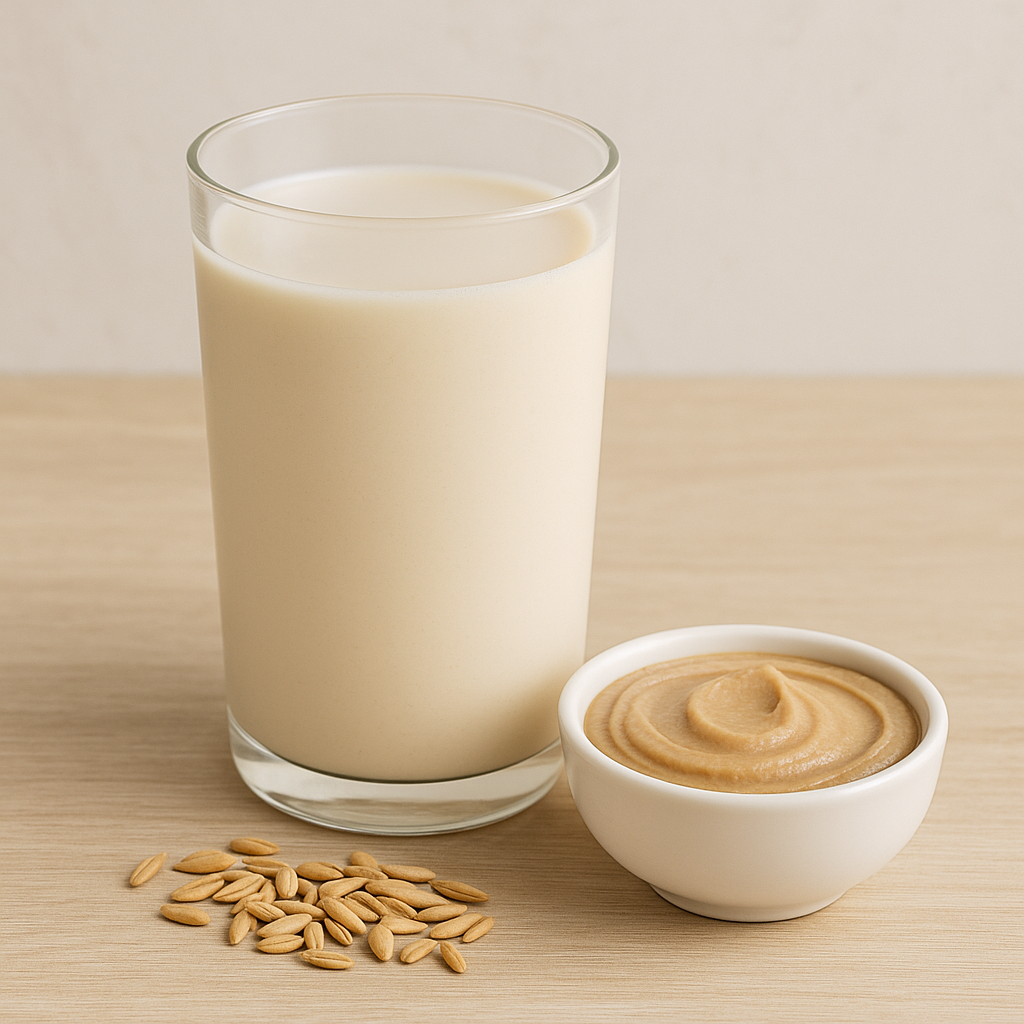
This is an AI generated illustration and does not represent actual product or service.
In response to the growing consumer demand for plant-based dairy alternatives, Nestlé has developed a novel format that could revolutionize the way plant-based milks are consumed and manufactured. This innovation—protected under a recently published patent—focuses on a plant-based edible paste designed to overcome the limitations of traditional liquid and powder dairy analogues.
The Technology Behind Nestlé’s Plant-Based Paste
Nestlé’s invention introduces a modular and flexible formulation platform for creating plant-based pastes that can be easily reconstituted into dairy-like beverages. This format provides the best of both worlds: the shelf stability and convenience of powders, and the ease of use and sensory profile of liquids—while also solving the critical challenges associated with both.
1. Multi-Component Composition
The core technological insight lies in the specific selection and combination of three main components:
Fat Component (e.g., vegetable oils): Enhances mouthfeel and stability, mimicking the creaminess of milk.
Non-Soy Grain Component (e.g., oat flour with <28% protein): Acts as the base carrier, chosen for mild flavor and texture benefits.
Protein Component (e.g., soy/lupine protein isolate or concentrate with >30% protein): Boosts nutritional value and enables milk-like consistency.
This combination allows fine-tuning of nutritional and functional characteristics to mimic cow’s milk, including comparable protein and fat levels.
2. Dry Mixing / Dry Milling Process
The paste is prepared through dry mixing or dry milling of all components, avoiding energy-intensive wet processes like spray drying. This not only reduces production energy but also:
Improves control over moisture content,
Enhances shelf stability (especially at ambient temperatures),
Lowers equipment costs, and
Allows small-batch, scalable manufacturing.
The final product contains low water content (<10%), making it resistant to microbial spoilage and ideal for shelf-stable applications in hot climates.
3. High Reconstitution Performance
One of the key limitations of powder or existing paste-based alternatives is poor reconstitution in water—especially cold water. Nestlé’s formulation overcomes this through:
Optimized particle sizes via milling,
Strategic use of hydrocolloids (optional) to prevent clumping,
Balanced protein–carbohydrate–fat interactions to ensure solubility.
The result is a smooth, stable liquid when mixed with water—even with minimal shear, such as simple hand-shaking—without grittiness, sedimentation, or beany notes.
4. Sensory and Functional Improvements
Nestlé has also engineered the product to offer:
Improved mouthfeel (thanks to balanced fat/protein ratios),
Reduced off-flavors (minimal beany or earthy notes),
Multifunctionality – it can be used as:
A direct milk alternative,
A spread or dip,
A base for culinary applications like sauces or desserts.
5. Nutritional Customization
The paste can be customized to meet specific nutritional targets, such as:
High-protein variants,
Fiber-enriched versions,
Low-sugar or sugar-free options.
Because it is modular, manufacturers can adapt the formulation to regional preferences, dietary needs (e.g., keto, diabetic-friendly), or sustainability goals.
Industrial and Environmental Advantages
The technology is also notable for its sustainability:
Reduced packaging waste: One jar of paste can replace multiple units of ready-to-drink beverages.
Lower logistics footprint: Paste is less bulky than liquid milk, and lighter than multiple small beverage packs.
Energy-efficient production: No spray drying, no cold chain during transport.
Longer shelf life: The paste remains stable even in warm temperatures, making it ideal for regions with unreliable refrigeration.
Nestlé’s Strategic Move in the Plant-Based Space
By offering a new format platform, this patent positions Nestlé to:
Expand its presence in the fast-growing plant-based market,
Offer B2B solutions for foodservice or manufacturers,
Enable customized plant-based dairy analogues tailored for different markets and use cases.
This format could serve as a universal base for future product lines in beverages, ready meals, sports nutrition, and more.
Nestlé’s edible plant-based paste isn’t just a new product—it’s a new category of plant-based dairy innovation. It reflects a deep understanding of both consumer needs and technical barriers in the alt-dairy space. The modularity, reconstitution ease, and multifunctionality offer a highly scalable and customizable platform that could reshape how plant-based beverages are developed, distributed, and consumed worldwide.


Trending Stories
Latest Stories
Inspiring the food industry by showcasing hidden and valuable innovations from patents.
Subscribe to our monthly newsletter and never miss a story
We promise, we won't spam you!
We care about your data in our privacy policy.


FoodTechForesight.com
Founder and Editor