
The Natural GLP-1 Breakthrough: LifeVantage’s New Dual-System Nutritional Strategy
NUTRACEUTICALS
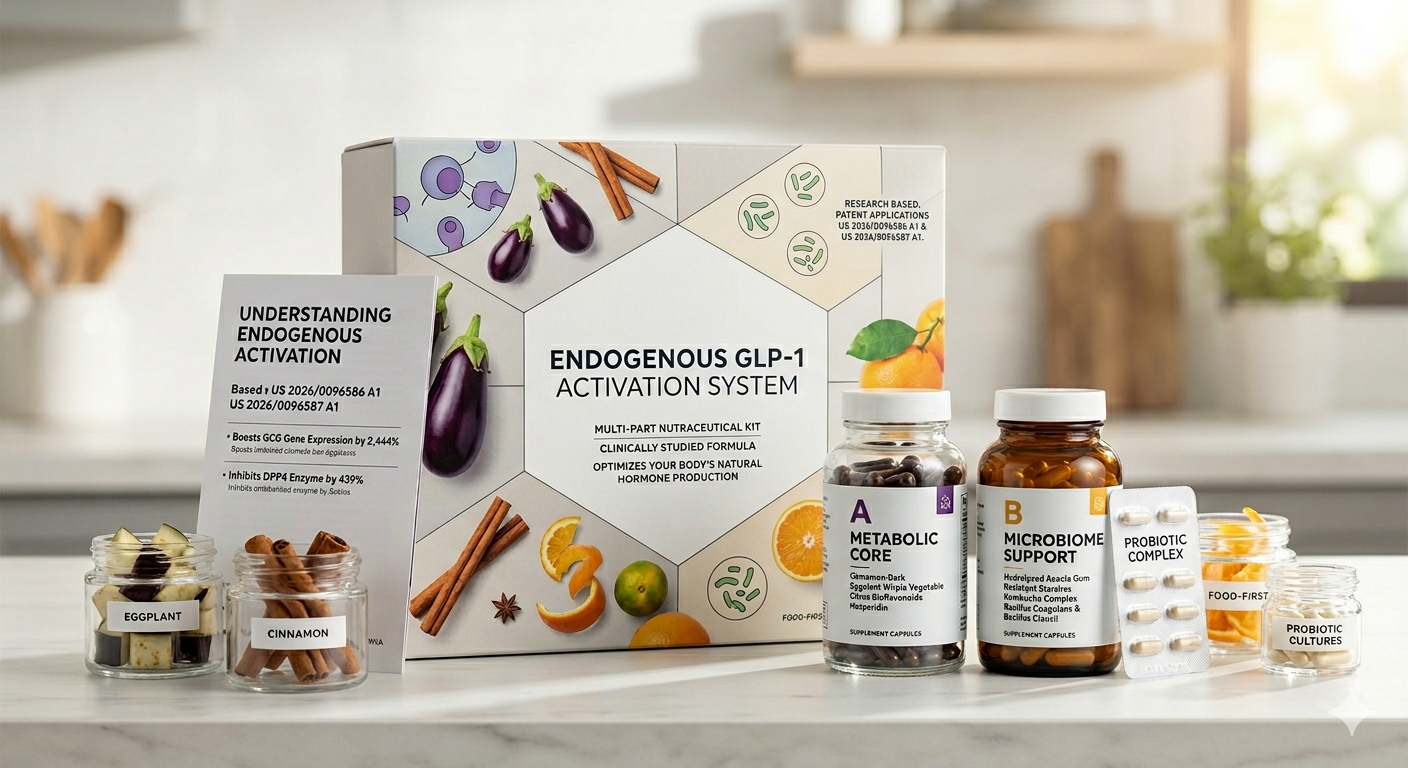
This is an AI generated illustration and does not represent actual product or service.
The metabolic health landscape is currently dominated by pharmaceutical GLP-1 agonists, but a new era of endogenous activation—triggering the body to produce its own GLP-1 through specific food compounds—is arriving. LifeVantage Corporation has recently filed two landmark patents (US 2026/0096586 A1 and US 2026/0096587 A1) that detail nutritional systems capable of increasing GLP-1 production by up to 200% without a single injection.
A Tale of Two Formulations
LifeVantage has developed two distinct supplement systems, likely tailored for different regulatory markets or biological synergies:
The Probiotic Approach (Domestic System): This formulation centers on a "Core" of hydrolyzed Acacia gum, lemon bioflavonoids, chromium, Berberis aristata, and hesperidin. It is paired with a secondary supplement featuring probiotics (Bacillus coagulans, Bacillus clausii), resistant starches, and kombucha.
The Botanical Approach (International System): This system uses a "Core Int'l" of hydrolyzed yeast, cinnamon bark, and eggplant whole vegetable. Its companion supplement swaps probiotics for antioxidant-rich blueberry juice powder, cranberry fruit powder, and grape seed extract.
The Science of Endogenous Activation
Unlike pharmaceutical agonists that mimic the GLP-1 hormone, these systems optimize the body’s entire GLP-1 lifecycle. The patents describe a multi-prong molecular mechanism:
Production: Massively increasing the expression of the Proglucagon (GCG) gene, which is the precursor to GLP-1.
Conversion: Boosting the PCSK1 gene, responsible for the enzyme that converts proglucagon into active GLP-1.
Protection: Significantly inhibiting the DPP4 gene, which encodes the enzyme that normally degrades GLP-1 in the blood.
Comparative Data and Results
The experimental results recorded in these patents show that these systems do more than provide basic nutrition; they fundamentally alter metabolic signaling.
In the Domestic System, mRNA GCG gene expression increased by 201%, while the GLP-1 degrading enzyme DPP4 was inhibited by 266%. This led to a measured increase in blood GLP-1 concentration of up to 140%.
The International System showed even more dramatic results at the molecular level, with a staggering 2,444% increase in mRNA GCG gene expression. It also achieved a 439% decrease in DPP4 gene expression and a 132% increase in GLP1R gene expression (the GLP-1 receptor). Overall, this system can increase total GLP-1 production by approximately 200%.
Foresight for the Food Industry
This data represents a major opportunity for food tech innovators. By moving beyond simple fiber supplements toward "bio-active" systems—using specific combinations of bioflavonoids, resistant starches, and botanicals like cinnamon and eggplant—manufacturers can create products that offer pharmaceutical-adjacent metabolic benefits through natural, endogenous pathways.


Trending Stories
Latest Stories
Inspiring the food industry by showcasing hidden and valuable innovations from patents.
Subscribe to our monthly newsletter and never miss a story
We promise, we won't spam you!
We care about your data in our privacy policy.


FoodTechForesight.com
Founder and Editor